

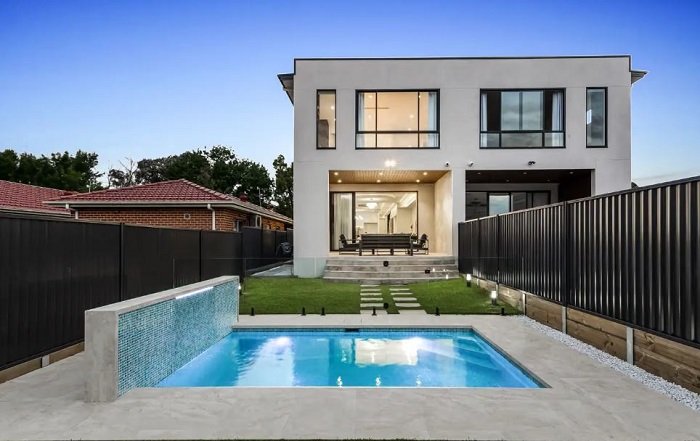
Most homeowners reach the same crossroads at some point. The house you bought ten or twenty years ago no longer fits the way you live. The kitchen is tired, the bathrooms leak, the kids need their own rooms, or a parent may soon move in. You love the street and the school zone, so moving is out. That leaves two choices: renovate what you have, or knock it down and start again.
As a builder, I am asked this question almost every week. There is no single right answer, but there is a right way to work it out. Here are the seven questions I suggest every family answers honestly before they spend money on drawings.
1. What is actually wrong with the house?
Start with the structure, not the finishes. Tired tiles and an old kitchen are cosmetic, and they are the classic case for renovating. Problems in the bones of the house are different: cracked or moving footings, sagging roof framing, termite damage, rising damp, old wiring or asbestos through the walls and eaves.
Get a proper building inspection and, if there is any sign of movement, a structural engineer’s report. It costs a few hundred dollars and can save tens of thousands. If the report lists major structural work, every renovation dollar you spend is going into fixing the past rather than improving the future, and a rebuild starts to look more sensible.
2. How much of the house would you keep?
A useful rule of thumb: if your plans touch more than about half of the existing floor area, ask for a rebuild price as well. Major renovations hide surprises. Once walls come off, builders find undersized beams, non-compliant plumbing or old additions that were never approved. Each surprise means a variation, and variations are where renovation budgets blow out.
With a new build, the scope is clearer from day one. You are not paying to protect, prop up and patch old work while new work goes in around it.
3. What will the finished home be worth, and to whom?
Think about the end result, not just the cost. A well-renovated older house can be lovely, but it usually keeps the limits of the original layout: low ceilings, a small number of bathrooms, a poor connection to the yard. A new home can be designed around the block’s orientation, with modern insulation, efficient glazing and a layout that suits how families live now.
If you plan to stay a long time, ask what will suit you in ten years. If you might sell, ask a local agent what buyers in your suburb pay a premium for. Often it is a second living area, an ensuite and off-street parking, which are hard to add to an old footprint.
4. Does the block allow more than one home?
This is the question people most often forget. Many suburban blocks across Sydney are large enough, and zoned, for a dual occupancy. Instead of one new house, you may be able to build two attached homes on separate titles, or a main house and a granny flat.
That changes the maths. One side can house your family while the other is sold to fund the build, rented for income, or kept for parents or adult children. Check your council’s planning controls for minimum lot size and frontage, and whether the project could go through as complying development. Talking to experienced duplex builders in Sydney before you commit to a renovation can show you options you did not know the block had.
5. Where will you live during the work?
Renovations are often sold as the cheaper option because you can stay in the house. In practice, any job involving kitchens, bathrooms, structure or roofing usually means moving out for at least part of the build. Dust, noise, disconnected services and safety rules make living on site hard with young children.
A knockdown rebuild means renting for the full build, often nine to fourteen months for a single home, longer for a dual occupancy. Put rent into both budgets from the start so you are comparing like with like.
6. How certain do you need the price to be?
Ask both options for a fixed-price contract with a clear list of inclusions and exclusions. New builds generally come with far fewer unknowns, so the contract price tends to hold. Renovations carry more provisional sums and allowances because nobody can see inside the walls.
Look carefully at what is excluded. Site costs such as demolition, rock excavation, retaining walls, stormwater and connection fees can add a large amount to a rebuild, and they vary a lot from block to block. A good builder will visit the site, check the survey and give you a realistic allowance rather than leaving it blank.
7. What approvals will you need?
Small internal renovations may need no approval at all. Larger alterations, additions and knockdown rebuilds generally need either a development application through council or a complying development certificate through a private certifier. Complying development is usually faster, but the design has to meet strict standards.
Heritage areas, flood zones, bushfire-prone land and easements can all limit what you can do, whichever way you go. Order a planning certificate for your property early. It is cheap and quickly tells you which rules apply.
Putting it together
Once you have answers to these seven questions, the decision usually becomes clearer. Renovate when the structure is sound, the layout mostly works, and the changes are focused. Rebuild when the bones are failing, when you would end up changing most of the house anyway, or when the block can do more for you than it does now.
Whichever way you lean, get the inspection, get both prices on a fixed basis, and give yourself a contingency of at least ten per cent. The families who are happiest with the result are rarely the ones who spent the most. They are the ones who asked the hard questions before the first wall came down.
Oliver Alameri is the founder of Buildana, a licensed builder based in Fairfield, Sydney, building custom homes, duplexes and knockdown rebuilds.
