

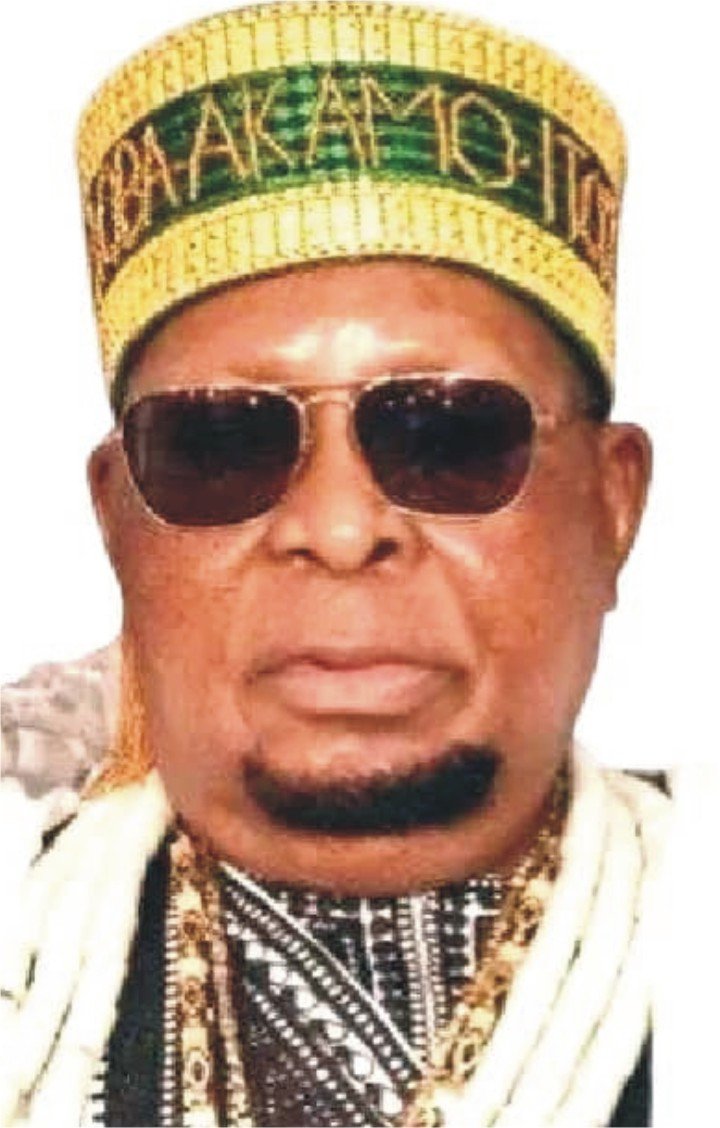
In the early hours of Saturday, September 26, 2026, news spread across Mushin, Isolo and Oshodi that popular Omo-Onile,Chief Taoreed Faronbi, widely known as Baba Alado, had died at the age of 84. His remains were buried the same day according to Islamic rites, with family members, friends, residents and prominent political and community figures in attendance. The speed of the burial and the size of the crowd that gathered at his Isheri drive venue spoke to the kind of man he was. Alado was not an unknown businessman but a patriarch whose name carried weight in Land matters, markets and motor parks. For many in Mushin, the announcement felt personal because Baba Alado had been present in their daily lives for decades, as a landlord, a market leader, a patron and a settler of disputes.
Alado’s authority did not come from wealth alone. Until his death, he was the Olori Ebi (head), of the Alagbeji Royal Family in Papa Ajao, Mushin, a position that placed him at the centre of family decisions, land matters and communal obligations. He also held the traditional title of Akinrogun of Isolo Kingdom and the commercial title of Babaloja of Aswani International Market, two roles that tied him to both palace and marketplace. In a part of Lagos where family, chieftaincy and commerce constantly overlap, those titles were not ceremonial decorations. They gave him a seat at every important table, from family meetings over inherited lands to market meetings over stalls, levies and trader welfare, and they explain why his death was felt as both a family loss and a community loss.
City People investigation reveals that it was in land that Baba Alado built the foundation of his reputation. For decades he was described as one of the biggest and most trusted land merchants in Lagos, a man whose name opened doors in the real estate sector and whose word was treated wit dispatch when the discourse centers around property or land issue. He operated at a time when Lagos was expanding rapidly and demand for plots in Mushin, Isolo, Ijegun and the surrounding axis was intense, as families, churches, mosques, traders and developers all competed for space. In that environment, a land seller who could trace family title, settle boundary questions and deliver possession was more than a broker, he was a power broker. That was the role Baba Alado played, and it Ais why his name remains attached to so many plots, layouts and family compounds in the area. Alado, before his death has traded in Land matters for over half a century and it is expected that a lot of resources would have accompanied it.
The most talked about part of the estate he left behind is the vast land. Those who knew his portfolio speak of it not as a single site but as a spread of holdings built up over a lifetime, with the Aswani, Isheriland and Mushin axis as its heartland. Some of this land was family land, held through his position as Olori Ebi of the Alagbeji Royal Family, where he carried the responsibility of protecting and managing what belonged to generations before and after him. Some of it was land he acquired, developed and sold in parcels over the years, creating streets, plots and settlements that still carry the imprint of his transactions. In Aswani, where commercial pressure has made every plot valuable, and in Mushin, where dense settlement has made land one of the scarcest resources, to hold land at that scale was to hold influence. It meant he could decide who built, who traded and who settled, and it meant his estate would inevitably become one of the most significant family inheritances in that corridor.
Alongside the land stands the housing he left behind. In Isheri and Mushin, housing is not just shelter, it is income, security and legacy, and Baba Alado understood that better than most. His estate is remembered as including family houses and compounds where generations lived, alongside rental houses that provided steady income and accommodation for tenants, traders and workers drawn to the commercial life of the area. For his children, these houses are now both a blessing and a responsibility, because they must be maintained, managed and shared in a way that honours the man who built them while keeping the family together.
He was also known to have a large family including wives whom he gifted different properties, automatically securing their future with that of their children.
The filling station in his portfolio marks the point where his empire moved beyond land and housing into modern commercial enterprise.
His filling station is a daily business that serves motorists, transporters and the entire informal economy that depends on fuel. For a man who rose through the transport union and the land market, owning a station made strategic sense because it connected his two worlds, the world of drivers and park chairmen and the world of property and investment. It also signalled a shift in his thinking, from selling land to holding income generating assets that could serve the family long after individual plots had been sold.
In conversations about what he left behind, the filling station is often mentioned with particular pride, because it stands as visible proof that Alado was not only a land seller but a businessman who built for the long term despite his little education.
As Babaloja of Aswani International Market, he was at the centre of trading activities in the area for several years, a position that placed him in direct contact with thousands of traders, from textile sellers(second hand clothings) electronic dealers to food vendors.The stalls associated with him in Aswani and Mushin are therefore understood in two ways, as property that generates rent and value. In Aswani, where the market is one of the most famous in Lagos, control of stalls meant control of opportunity, and his role gave him the power to mediate, to allocate and to protect. That is why traders remember him not just as a landlord but as a market leader, a man who knew the rhythm of market days, the problems of locked shops and the politics of space.
Beyond property, Baba Alado was a prominent figure in the National Union of Road Transport Workers, where he was widely regarded as a leader. He was also a prominent figure in Lagos grassroots politics, real estate and the transport sector for decades. Beyond politics and transport, he was a prominent socialite celebrated by leading Fuji and Juju musicians, including K1 De Ultimate who played at his 41 days final burial party on Thursday November 12 at the NITEL Ground,Oshodi. When he died, the National President of the NURTW, MC Oluomo, said he was a man who made his mark and whose name will remain remembered by many, adding that his contributions, relationships and presence within the transport and community space will not be forgotten. That tribute captured why his burial drew politicians, transport leaders, socialites and ordinary residents alike.
For his children, the task now is to manage the lands, houses, filling station and market stalls in Aswani and Mushin with the same firmness and wisdom he was known for, protecting what is theirs while preserving the peace he worked to maintain in life.
Wole Alakija
08055001823
