

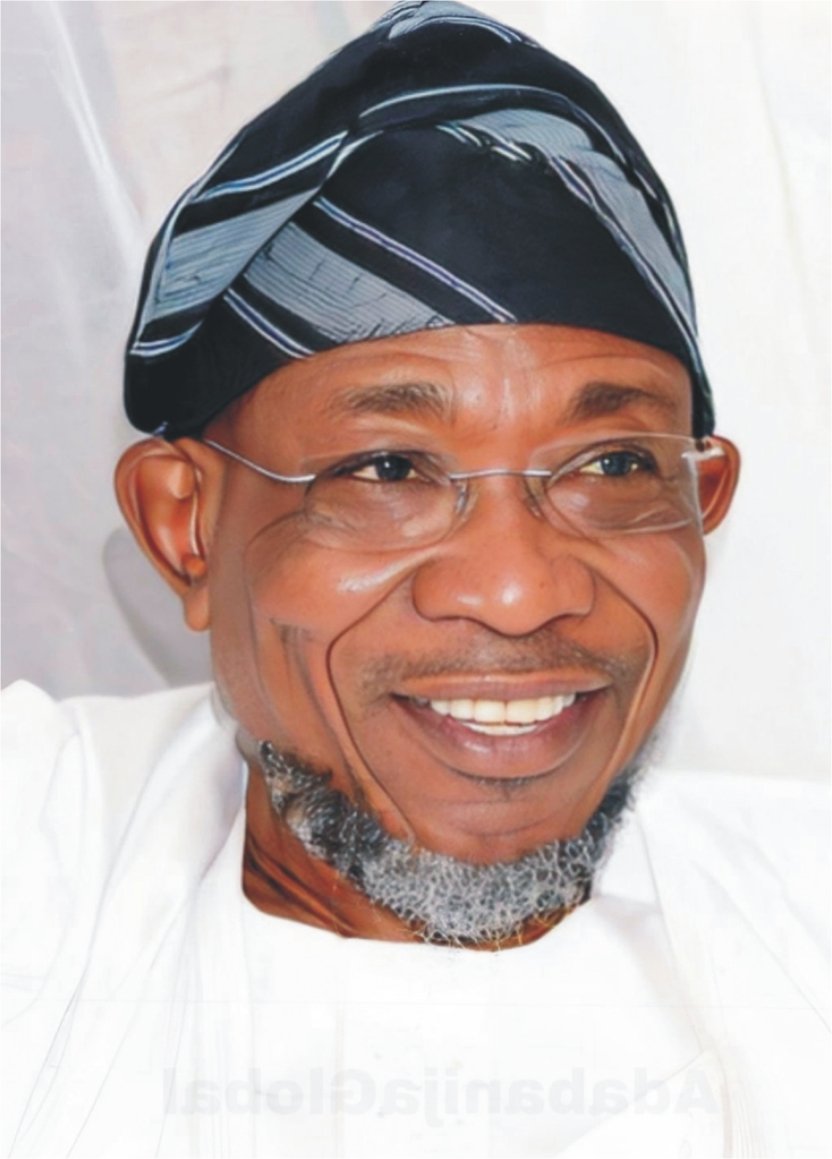
The political fortunes of former Osun State Governor, Ogbeni Rauf Aregbesola, within the African Democratic Congress (ADC) appear to have gotten from bad to worse in recent times. Once regarded as one of the influential figures in the party’s emerging national structure, Aregbesola is increasingly finding himself at the centre of internal disagreements that threatens his political standing, particularly in the South-West.
For a politician who built a formidable political network in Lagos and Osun, served as governor and later became Minister of Interior, the unfolding developments within ADC represent a significant political challenge.
Interestingly, the challenge is not coming only from political opponents outside the party. Some of the strongest criticisms are now coming from within the ADC itself, particularly from politicians in the South-West who once looked to him as an important rallying point.
The questions being asked are becoming increasingly uncomfortable: Has Aregbesola lost the confidence of important South-West politicians? Is he being pushed away from the centre of Atiku Abubakar’s political calculations? And why are some ADC stakeholders questioning his loyalty to the opposition project?
One of the developments that brought Aregbesola’s changing political position into sharper focus is his absence from Atiku Abubakar’s presidential campaign council.
When the ADC unveiled its campaign structure, the former Osun governor, who occupies the position of National Secretary in the David Mark-led party structure, was conspicuously absent from the list of key campaign appointments.
For many political observers, the omission was noteworthy. Aregbesola is not an ordinary party member. He was among the prominent figures involved in the political realignment that brought opposition heavyweights into the ADC ahead of the 2027 general elections.
The party’s National Publicity Secretary, Bolaji Abdullahi, however, dismissed suggestions that the omission represented a deliberate attempt to sideline Aregbesola. He explained that national officers had responsibilities in running the party and did not necessarily need appointments in the presidential campaign council.
That explanation notwithstanding, the development has continued to generate political discussion, especially against the background of growing disagreements within the South-West chapter.
Perhaps the biggest challenge facing Aregbesola is the growing opposition to his leadership among sections of the ADC in the South-West.
The relationship between him and some regional stakeholders has reportedly deteriorated over disagreements about party administration, political appointments, candidate selection and the management of party structures.
In September, ADC governorship candidates and other party leaders reportedly met in Ibadan to complain that Atiku was conducting political activities in the region through personal associates rather than engaging established party structures.
Aregbesola was present at the meeting, where the complaints were reportedly communicated to the national leadership.
The development exposed an uncomfortable contradiction: while some South-West politicians were complaining about being sidelined by Atiku, Aregbesola himself was facing questions about his relationship with important regional stakeholders.
The disagreement took a more dramatic turn on November 12, 2026, when some South-West ADC stakeholders called for Aregbesola’s immediate suspension as National Secretary.
At the end of an emergency zonal strategic stakeholders’ meeting in Ibadan, the group issued a communiqué accusing him of taking actions they considered contrary to the party’s constitution.
Among their allegations was that he had established parallel party structures across the South-West under the banner of Omoluabi Progressive and presented members of the group as ADC officials.
They also questioned his handling of party appointments and the creation of caretaker committees, arguing that such decisions should not be taken unilaterally.
The stakeholders went further, accusing him of personalising the responsibilities of the National Working Committee and undermining the party’s efforts to build a united political platform.
Their demand for his suspension represents one of the strongest public challenges to his authority since he assumed the National Secretary position.
It also raises a fundamental question about whether Aregbesola can still command the confidence of the political stakeholders he needs to build a formidable ADC structure in the South-West.
The APC mole allegation: A suspicion that refuses to disappear
Perhaps the most politically damaging aspect of the controversy is the suspicion among some politicians that Aregbesola may not be entirely committed to the ADC’s opposition project.
Some of his critics have questioned his political loyalty, with allegations that he could be maintaining connections with interests within the ruling All Progressives Congress.
The suspicion is rooted partly in his political history. Aregbesola was a prominent figure in the progressive political establishment that produced the APC and served as Minister of Interior under President Bola Tinubu.
His political relationship with Tinubu dates back many years, and both men were important figures in the political structure that shaped Lagos politics.
Although Aregbesola later fell out with Tinubu’s political camp, some ADC stakeholders remain unconvinced that the old political relationship has completely disappeared.
For these critics, his past association with the APC makes his position within the opposition party a subject of scrutiny.
There have also been allegations by South-West stakeholders that he was acting more in the interest of President Tinubu than the ADC. These are serious political accusations, but they have not been independently established as evidence that he is working as an APC mole.
Nevertheless, in Nigerian politics, suspicion about loyalty can become almost as damaging as an established political disagreement, particularly in a coalition where different interests are struggling to control the party’s direction.
Aregbesola’s political strength was historically built around his relationships, political structures and grassroots networks.
He was once considered an important political force in Osun and had considerable influence in Lagos through his association with the progressive political movement.
However, the political environment has changed. Some of the politicians who previously identified with his political camp have moved on, while others are pursuing independent political interests.
The ADC’s emergence as a coalition platform has also brought together politicians with different backgrounds, ambitions and loyalties.
For some of these politicians, Aregbesola’s leadership style and the manner in which party structures are being managed have become sources of disagreement.
Isaac Abimbade
08155107955
