

-
In IJEBU Igbo, OGUN State
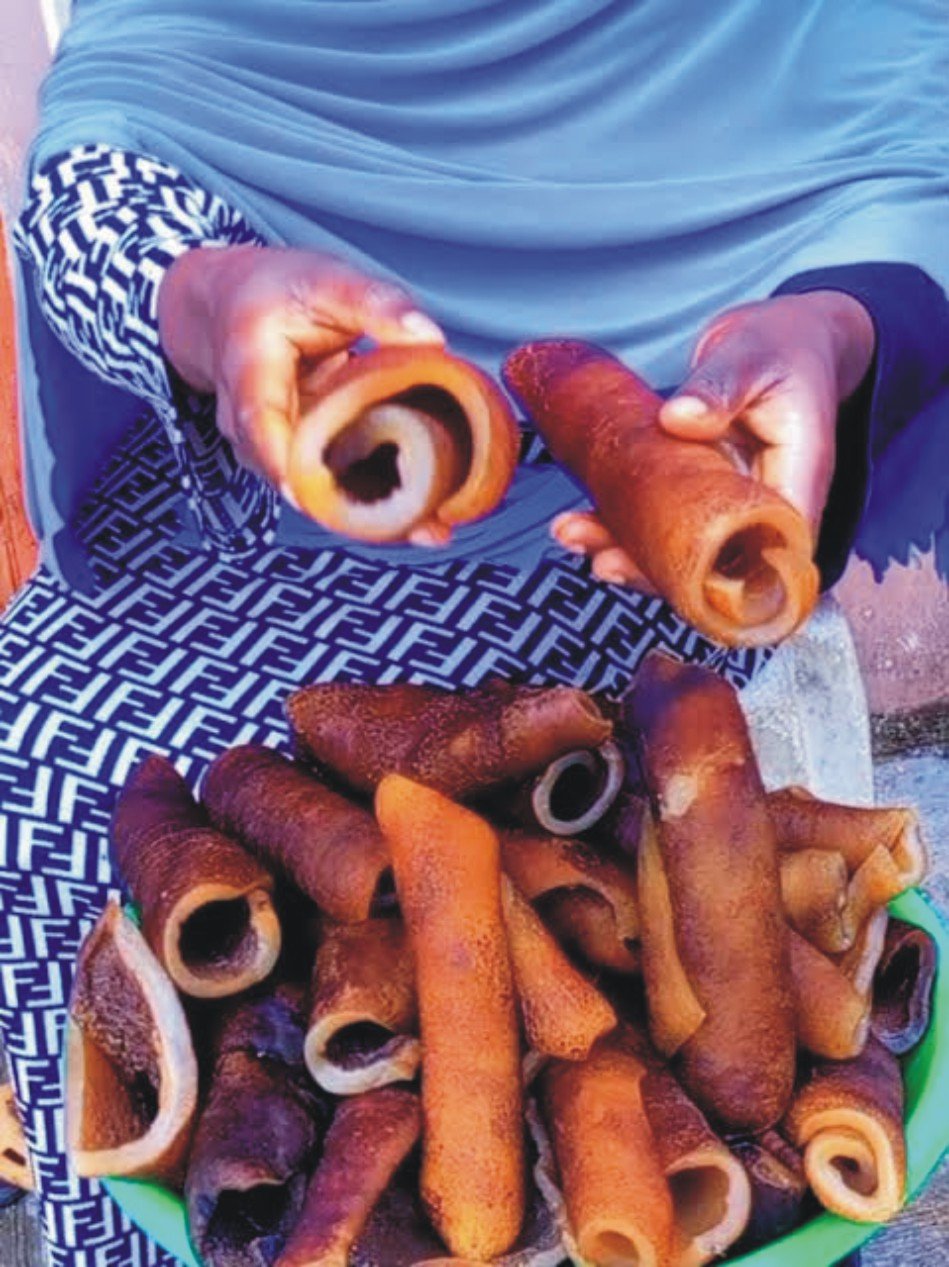
To many Nigerians, Ponmo is simply that chewy delicacy that adds a special touch to a pot of pepper soup, assorted meat, Efo riro, Egusi soup or a plate of Amala and Ewedu. For some food lovers, a meal is hardly complete without it. But in Ijebu Igbo, Ogun State, Ponmo represents much more than a popular food item. It is a thriving business, a source of livelihood for numerous families and an industry that has transformed the commercial fortunes of many people in the community.
From the women who pioneered the trade decades ago to the young graduates now managing processing operations, trading depots and distribution businesses, the story of Ponmo Ijebu is one of entrepreneurial ingenuity, intergenerational knowledge and the determination to turn an everyday commodity into a profitable enterprise.
Today, Ijebu Igbo has established itself as one of Nigeria’s notable centres for ponmo processing and distribution. Traders travel from different parts of the country to purchase the product in commercial quantities, while the industry supports a network of suppliers, processors, wholesalers, transporters, retailers and other service providers.
But how did this Ogun State town develop such a strong reputation in the ponmo business? Why do many buyers prefer to source their products from Ijebu Igbo? How lucrative is the industry, and what is attracting an increasing number of young people, including university graduates, to the trade?
The answers reveal a fascinating story of a traditional business that has grown into a significant commercial ecosystem.
HOW IT ALL STARTED: THE PIONEERS BEHIND PONMO IJEBU
The rise of the ponmo business in Ijebu Igbo was not the achievement of one individual alone. Rather, it developed through the efforts of pioneering traders who identified an opportunity in cowhide, established supply connections and gradually built a specialised processing and distribution network.
One of the best-known pioneers is Madam Abeni Lawal, popularly known as Iya Owo Oniponmo.
In a report published in September 2016, Nigerian Tribune identified her as one of the first three traders to bring cowhide from northern Nigeria to Ijebu Igbo for commercial-scale ponmo production. By the time of that report, she had reportedly spent more than four decades in the business.
Interestingly, her journey into the ponmo trade began with a different line of business. She had been travelling to northern Nigeria to purchase beans and maize for resale. During those trips, she encountered cowhides and was encouraged by a neighbour to explore their commercial potential.
What began as an opportunity discovered during her trading journeys eventually developed into a specialised business. She started sourcing the hides, learned the processing trade and built a market for the finished product.
Her story captures the entrepreneurial spirit that helped shape the industry. Rather than waiting for opportunities to come to them, early traders identified a product that could be sourced elsewhere, processed locally and sold to willing customers.
Other traders followed, and as the business expanded, more people entered the industry. Processing knowledge spread, supply relationships developed and commercial activities became increasingly concentrated around the town.
In May 2019, Nigerian Tribune reported that the chairman of the Hide and Skin Association’s Ijebu Igbo branch estimated that the trade had existed for approximately 80 years. Although the precise founding date has not been independently established, the estimate suggests that the business has roots stretching back several decades.
Over time, the trade evolved from the activities of pioneering merchants into a broader industry with multiple participants and increasingly extensive distribution networks.
WHY IJEBU IGBO BECAME A HUB FOR PONMO PRODUCTION
One of the most important factors behind Ijebu Igbo’s success is that the town developed more than a market for ponmo; it developed a network of people who know how to source, process, sell and distribute it.
The business brings together suppliers of raw cowhide, processors who transform the material, wholesalers who purchase finished products and retailers who distribute them to consumers.
This concentration of commercial expertise creates an advantage. Buyers can visit the town, approach different sellers, compare available products and negotiate purchases in quantities suitable for their businesses.
The town’s established processing tradition has also played an important role. Producing the familiar brown ponmo requires experience, labour and an understanding of the different stages involved in preparing cowhide for consumption.
Traditionally, the process involves applying heat to remove the hair, followed by appropriate cleaning, soaking and preparation. The finished product is then sorted and sold according to buyers’ requirements.
Over the years, operators have developed practical knowledge of these activities, while family businesses and apprenticeships have helped transfer skills from one generation to another.
Another factor is the development of commercial relationships. Traders who consistently supply satisfactory products can establish long-term arrangements with wholesalers, market sellers, restaurants and food vendors. Such relationships create repeat business and help sustain demand.
Ijebu Igbo’s reputation, therefore, rests on a combination of processing expertise, experienced operators, established suppliers and a market that attracts buyers from outside the community.
WHY MANY BUYERS PREFER PONMO FROM IJEBU IGBO
Ask traders and regular buyers about Ponmo Ijebu, and the town’s reputation is likely to feature prominently. But what exactly attracts them?
One major factor is the association with traditional brown ponmo, which has become a recognisable product in the market. Consumers familiar with this variety often have particular preferences regarding its appearance, texture, size and preparation.
The presence of numerous traders and processors is another attraction. Buyers can compare products and negotiate with different operators instead of relying on a single supplier. For wholesalers purchasing in bulk, the ability to source significant quantities from an established trading centre can make commercial sense.
There is also the value of experience. Traders who have spent years in the business understand the requirements of their customers, the practicalities of sourcing and the importance of maintaining reliable relationships.
For buyers outside Ogun State, travelling to Ijebu Igbo may also be a way of connecting directly with established suppliers rather than purchasing through several intermediaries.
The town’s reputation has consequently become an important commercial asset. However, it is worth distinguishing reputation from a guarantee of quality. Not every product sold in Ijebu Igbo is necessarily better than ponmo produced elsewhere. The quality of an individual batch depends on the original hide, processing conditions, cleanliness, handling and storage.
Proper food-safety practices are equally important. The use of hides intended for industrial leather production, or hides contaminated through inappropriate handling, poses serious risks. The origin and suitability of the raw material must therefore be established.
The strongest explanation for the town’s appeal is not simply that its ponmo is considered the best, but that it offers an established environment for sourcing, processing and trading a product with a loyal customer base.
– Jamiu Abubakar
