

-
Despite Economic Hardship
Despite Nigeria’s persistent economic challenges, rising food prices, high transportation costs, inflation and declining purchasing power, Unilever Nigeria Plc has continued to grow its revenue and profits, demonstrating how a company with established consumer brands can remain competitive in a difficult business environment.
From seasoning cubes and tea to toothpaste and petroleum jelly, Unilever has built a business around products that address everyday household needs. Its brands have become familiar to generations of Nigerian consumers, while its long-standing presence in the country has helped it develop relationships with distributors, retailers and customers across different markets.
The company’s recent financial performance provides a compelling picture of its resilience. Its revenue increased from approximately ¦ 103.88 billion in 2023 to ¦ 149.52 billion in 2024 and ¦ 214.30 billion in 2025. This represents more than a doubling of annual revenue in just two years, even as consumers and businesses struggled with the rising cost of living.
The company’s audited financial statements for 2025, published on its official website, show that its revenue increased by approximately 43.3 per cent compared with 2024. Profit after tax also rose from ¦ 15.14 billion in 2024 to ¦ 32.20 billion in 2025, an increase of more than 112 per cent. These figures suggest that Unilever’s performance has improved not only in sales but also in its ability to translate revenue into profits.
Its performance in 2026 has also provided fresh evidence of growth. According to its unaudited financial results for the nine months ended September 30, 2026, the company recorded revenue of approximately ¦ 184 billion, compared with about ¦ 155.4 billion in the corresponding period of 2025. Gross profit rose to approximately ¦ 85.5 billion, while profit after tax increased to ¦ 26.4 billion from ¦ 21.9 billion.
The figures indicate that Unilever has continued to expand its business despite the economic pressures affecting Nigerian households. However, rising revenue does not automatically mean that consumers are buying more products in physical quantities. Price increases, changes in product mix, operational improvements and shifts in demand can all contribute to higher financial results.
The question, therefore, is how Unilever has managed to sustain this performance, and why its products could continue to generate business in the years ahead.
Unilever’s history in Nigeria dates back to 1923, when the company began operations through West Africa Soap Company, which later became Lever Brothers Nigeria Limited. Its early business focused on soap production at a time when hygiene and household cleaning products were becoming increasingly important to consumers.
According to the company’s historical records, it commissioned a factory in Apapa, Lagos, in 1924 and subsequently expanded its manufacturing operations to Aba, Abia State, in 1958. It established additional production facilities in Lagos and Ogun State as the business grew.
Over time, the company expanded beyond soap manufacturing into food, personal care and other consumer products. Its expansion included the acquisition of Lipton Nigeria Limited in 1985 and Cheesebrough Industries Limited in 1988. The business eventually adopted the name Unilever Nigeria Plc in 2001.
The company was listed on the Nigerian Stock Exchange in 1973, giving investors an opportunity to own shares in the business. Today, its shares trade on the Nigerian Exchange.
Unilever’s century-long history in Nigeria has given it something many new entrants struggle to build: brand recognition, established distribution relationships and familiarity with local consumers.
One of Unilever’s biggest advantages is the variety of everyday needs its products serve.
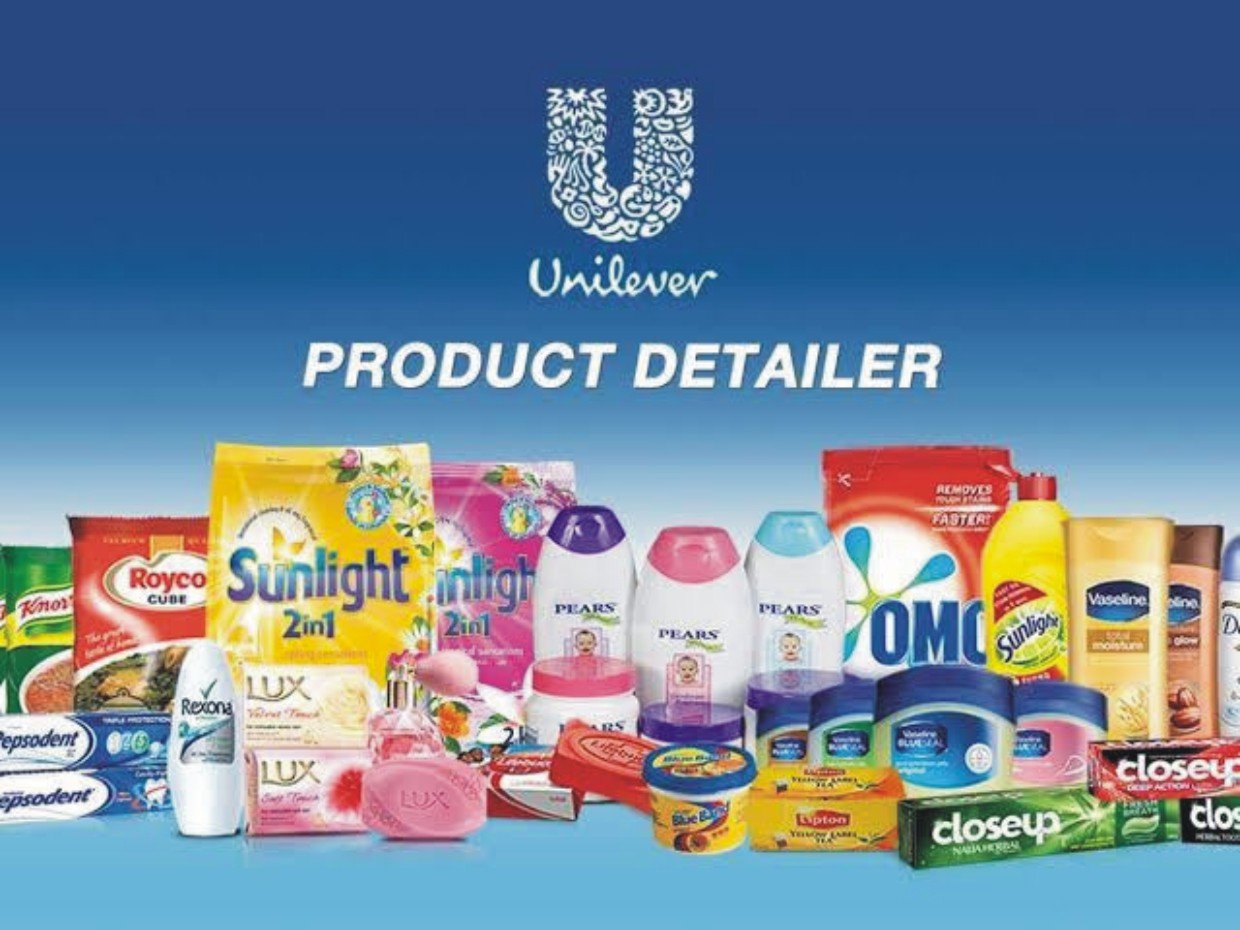
Its food portfolio includes Knorr seasoning cubes and Royco seasoning products, while its personal care brands have included Closeup toothpaste, Pepsodent toothpaste, Vaseline petroleum jelly and lotions, Rexona deodorants and Pears products.
However, it is important to distinguish the company’s historical portfolio from its current operations. Unilever Nigeria announced in 2023 that it would discontinue its home care and skin-cleansing operations. Consequently, brands such as Omo detergent, Sunlight detergent and Lux soap should not automatically be treated as part of its current active Nigerian business simply because they were historically associated with the company.
This strategic change is significant because it shows that Unilever’s growth has not simply depended on continuing to sell everything it previously manufactured. Instead, the company has concentrated its resources on selected brands and categories where it believes it can compete effectively and generate sustainable returns.
For households, the appeal of products such as seasoning cubes, toothpaste and petroleum jelly is relatively straightforward. Cooking, brushing teeth and maintaining personal hygiene are recurring activities.
Consumers may reduce spending on entertainment, expensive clothing and other discretionary purchases during difficult economic periods, but they still need to prepare meals and maintain basic hygiene.
This creates a degree of resilience for companies that manufacture widely used consumer goods.
Its long-established presence gives it an advantage, but it does not eliminate competition.
The company’s published financial results provide the clearest evidence of its recent progress. In 2023, Unilever Nigeria recorded revenue of approximately ¦ 103.88 billion and profit after tax of about ¦ 8.44 billion.
In 2024, revenue increased to ¦ 149.52 billion, representing growth of approximately 44 per cent. Profit after tax rose to ¦ 15.14 billion, an increase of approximately 79 per cent.
The improvement continued in 2025, when revenue reached ¦ 214.30 billion. Profit after tax climbed to ¦ 32.20 billion. These figures are reported in the company’s audited financial statements for the years concerned, including its 2025 annual report. The three-year comparison is revealing.
Sources: Unilever Nigeria’s audited financial statements for 2025 and published results for 2024. Figures are rounded.
Between 2023 and 2025, annual revenue increased by approximately 106 per cent, while profit after tax grew by about 282 per cent.
In other words, the company’s annual revenue more than doubled in two years, while its annual profit increased to almost four times its 2023 level.
This is particularly noteworthy because Nigeria’s economic conditions have placed considerable pressure on manufacturing companies.
Unilever’s results suggest that it has found ways to navigate these pressures through a combination of stronger revenue, portfolio decisions, cost management and operational improvements.
However, the figures must be interpreted carefully. Higher revenue does not necessarily mean that the company sold twice as many units. Inflation and price adjustments can increase the naira value of sales even when the physical volume of products sold grows more slowly.
Similarly, higher profit can reflect improved operating performance and other financial factors. It is therefore more accurate to say that Unilever’s financial performance has strengthened than to conclude that every product has experienced a corresponding increase in demand.
The company’s latest available results as of October 28, 2026, show that its growth has continued into the current financial year.
According to Unilever Nigeria’s unaudited interim financial statements for the nine months ended September 30, 2026, revenue reached ¦ 184.01 billion, compared with ¦ 155.41 billion in the corresponding period of 2025.
That represents an increase of approximately 18.4 per cent.
Gross profit increased from ¦ 63.97 billion to ¦ 85.46 billion, while operating profit rose from ¦ 30.46 billion to ¦ 38.54 billion.
Profit after tax increased from ¦ 21.98 billion in the first nine months of 2025 to ¦ 26.40 billion in the same period of 2026, representing growth of approximately 20.1 per cent. These figures appear in the company’s financial statement filed with the Nigerian Exchange.
The results indicate that the company generated approximately ¦ 184 billion in revenue during the first nine months of 2026, with about ¦ 26.4 billion remaining as profit after tax.
Revenue is the money generated from sales before deducting expenses. Profit after tax is what remains after the company accounts for its expenses and tax obligations. The two figures should therefore not be confused.
For Unilever, maintaining that confidence will be essential to protecting its position.
Unilever’s recent performance demonstrates that a company can grow financially even when the wider economy remains challenging. Its revenue increased from ¦ 103.88 billion in 2023 to ¦ 214.30 billion in 2025, while its nine-month revenue for 2026 reached ¦ 184.01 billion.
Its future opportunities include strengthening its leading brands, improving product availability, developing offerings that respond to changing consumer needs and maintaining efficient operations.
The company must also continue to demonstrate that its products provide meaningful value in a market where alternatives are readily available and household budgets remain under pressure.
Ultimately, Unilever’s story is not simply about selling products that people need. It is about maintaining consumer confidence, responding to economic realities and ensuring that familiar brands remain relevant as purchasing habits change.
If the company continues to execute its strategy effectively while paying attention to affordability, its established market position could support further growth in the coming years.
Its latest results provide encouraging evidence of that possibility, although the sustainability of the growth will depend on future economic conditions, competition and the company’s ability to meet consumers’ expectations.
By Benprince Ezeh
08068599879
