

-
Details Of The Internal Battle Rocking APM
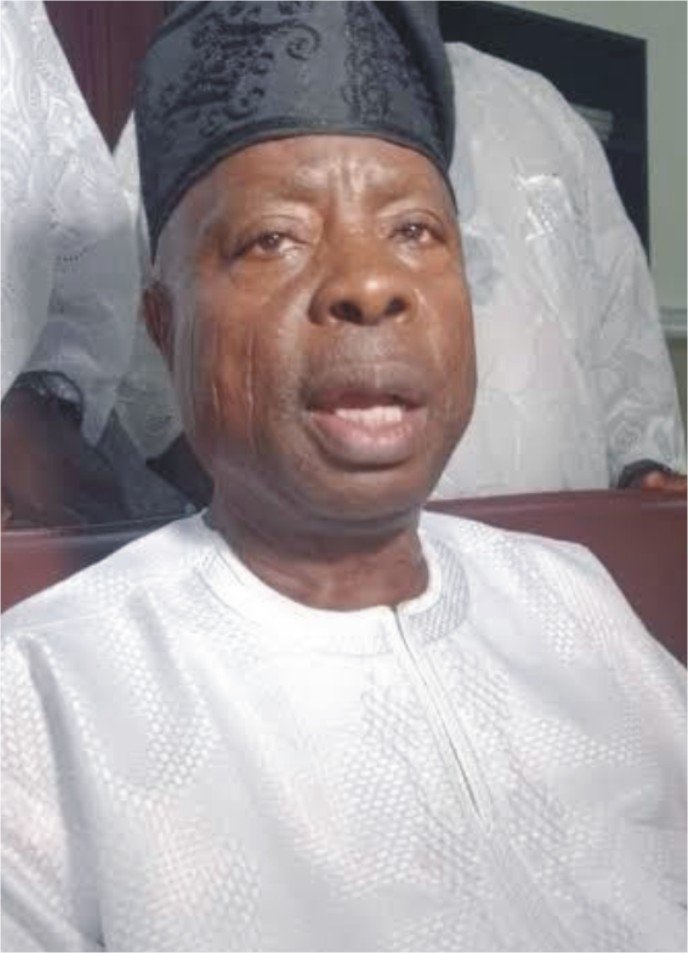
The political battle involving Governor Seyi Makinde of Oyo State and Alhaji Adebisi Olopoeyan is getting messy. And it raises important questions about political loyalty, party ownership, influence and control of political structures in Oyo State. At the heart of the dispute is Olopoeyan’s allegation that Makinde has made moves to take over the Allied Peoples Movement (APM) structure which he regards as his political platform.
To understand why the 2 men are at loggerheads, it is necessary to examine who Olopoeyan is, how he built his reputation in Oyo politics, his relationship with Makinde, and why control of a political party can become a major source of conflict between former allies. We can tell you the story. He is a veteran Ibadan politician known for his grassroots mobilisation, political boldness and long association with the late Chief Lamidi Ariyibi Adedibu, one of Oyo State’s most influential political figures.
Olopoeyan has spent decades building relationships with political leaders, party members and grassroots supporters. His political influence became particularly visible during the era when Adedibu’s political network played a decisive role in determining electoral fortunes in Ibadan and other parts of the state. He is widely known as a politician who is prepared to speak openly, even when his views put him at odds with powerful political figures.
His importance in Oyo politics also comes from his experience in party organisation and mobilisation. He has operated within different political alignments, including the defunct National Party of Nigeria (NPN), the Peoples Democratic Party (PDP) and the New Nigeria Peoples Party (NNPP). He later emerged as a prominent figure in the Allied Peoples Movement (APM) in Oyo.
Olopoeyan’s political journey stretches back to the period before Nigeria’s return to democratic government in 1999. He was involved in the NPN before the military coup of December 1983 interrupted civilian politics. With the return of democracy, he joined the PDP and, around 2000, was introduced to the late Lamidi Adedibu. That relationship became a major turning point in his political life.
Adedibu was famous for his grassroots network, political organisation and ability to mobilise supporters. Olopoeyan learned from that political environment and developed his own network of relationships. His subsequent support for former Oyo governor Adebayo Alao-Akala and later for Seyi Makinde placed him within some of the state’s most consequential political contests.
For Olopoeyan, politics has never been merely about belonging to a party. It has also been about having a voice in how that party is run, who gets its tickets and how its supporters are rewarded with opportunities. That philosophy helps explain why disputes over the APM structure have become so important to him. One of the most significant chapters in Olopoeyan’s political history is his relationship with Governor Seyi Makinde. Before Makinde won the Oyo governorship election in 2019, Olopoeyan was among the political figures who helped introduce him to influential stakeholders and mobilise support for his ambition.

Olopoeyan once recalled taking Makinde to meet established political leaders after the PDP governorship primary. He said he had worked to pacify aggrieved stakeholders and help consolidate support for Makinde. Olopoeyan’s argument was that Makinde did not win the election alone. He insists that established politicians and their grassroots networks also contributed to his victory.
This was the foundation of a relationship that later became troubled. Why did their relationship deteriorate after Makinde assumed office. Olopoeyan publicly complained that the governor had distanced himself from people who helped bring him to power. He also challenged Makinde’s assertion that he did not have a political godfather. In Olopoeyan’s view, politicians who had invested their time, relationships and resources in a candidate’s victory deserved continued consultation and recognition.
The split became sufficiently serious that Olopoeyan left the PDP and joined the NNPP, where he became a prominent Southwest leader. In 2021, he was openly critical of Makinde’s political management and questioned the governor’s ability to secure a second term. Their political differences did not last forever.
On March 20, 2023, Olopoeyan visited Makinde after the governor’s re-election victory. The reconciliation was publicly reported. Olopoeyan played down the severity of their disagreement, describing it as a misunderstanding that had been resolved. Both men expressed a willingness to work together for the development of Oyo State.
Why is Makinde and Olopoeyan fighting over APM?
The latest dispute has developed into a struggle over the management of the APM, its leadership, its candidates and the interests of the people who built its structures. In August 2026 a fresh crisis involving Makinde’s political alliance with Olopoeyan broke out. The immediate issue was the selection of candidates for Oyo State’s forthcoming local government elections. The dispute arose partly because Olopoeyan’s camp believed that established APM members and his loyalists were being sidelined in the allocation of chairmanship tickets and other political opportunities after Makinde and his supporters entered the party. The controversy raises 3 major questions.
- WHO BUILT THE APM STRUCTURE IN OYO?
Olopoeyan’s Camp maintains that it invested in building the party’s organisation across the state before the arrival of Makinde and his political supporters. Some political analysts say Olopoeyan had secured positions for loyalists in the party’s executive structures before Makinde’s group joined the platform. It further reported that the arrival of the governor’s supporters led to pressure for changes in the leadership arrangement. From this perspective, the dispute is about whether the original party builders should retain a meaningful say in its affairs.
- IS MAKINDE TRYING TO TAKE OVER THE PARTY?
This is the central allegation of Olopoeyan’s camp: that Makinde and his political associates are seeking to take control of the APM structure that the existing members helped establish. The reported dispute concerns the extent to which the governor’s political group should influence the party’s leadership and selection of candidates. Available reports suggest that there is a serious dispute over party administration and candidate selection.
- WHO GETS THE TICKETS?
The question of candidate selection is perhaps the most immediate source of tension. In August 2026 the breakdown in the alliance were linked to disagreements over the allocation of local government chairmanship slots and the alleged exclusion of legacy APM members. The conflict subsequently moved into the courts.
Last August, 384 APM candidates — 33 chairmanship candidates and 351 councillorship candidates approached the Federal High Court in Ibadan over reported plans to conduct fresh primaries for the local government elections. The candidates argued that their earlier primaries had been monitored by the Oyo State Independent Electoral Commission and that their nominations should not simply be displaced by rival candidate groups associated with Olopoeyan and Makinde’s political camp.
This development transformed the political quarrel into a dispute involving candidate legitimacy, party rules and judicial interpretation. What does Olopoeyan plans to do next? We can also tell you. Olopoeyan has reaffirmed his commitment to the APM amid the ongoing internal crisis. He recently hosted 24 members of the party’s 30-member state executive committee and chairmen from 32 of the state’s 33 local government areas.
Olopoeyan insisted that he and his supporters are not planning to abandon the party. Instead, he said they wanted genuine members who had helped build the APM to receive proper recognition and participate in its decision-making. On the disputed candidates, Olopoeyan said the matter had been taken to court and maintained that his camp would accept the court’s eventual decision. We gathered that rather than simply defecting to another platform, he is determined to fight for influence from within the APM. That makes the struggle a contest over who has the legitimate authority to speak for the party’s existing members.
Political analysts say his is a dangerous political test for Makinde . The APM dispute presents Makinde with a political management challenge. Many possible consequences flow from this:
First is a split among party supporters. If the 2 camps fail to reach a settlement, competing loyalties could weaken the APM’s ability to organise effectively. Second, prolonged litigation over candidates. Court cases can complicate preparations for elections and leave candidates uncertain about their status. Third, damage to relationships within the wider political coalition. Other politicians may watch how the dispute is resolved to judge whether established party members can retain meaningful influence after a stronger political bloc joins their platform.
If neither side accepts a compromise, the disagreement could weaken the party’s internal cohesion and encourage defections or competing political arrangements. So, the story of Bisi Olopoeyan is, in many ways, the story of an experienced grassroots politician confronting the changing balance of power in Oyo State.
