

-
As They Determine Who The Next Governor Is
+The Role Of Pres. BOLA TINUBU Revealed!
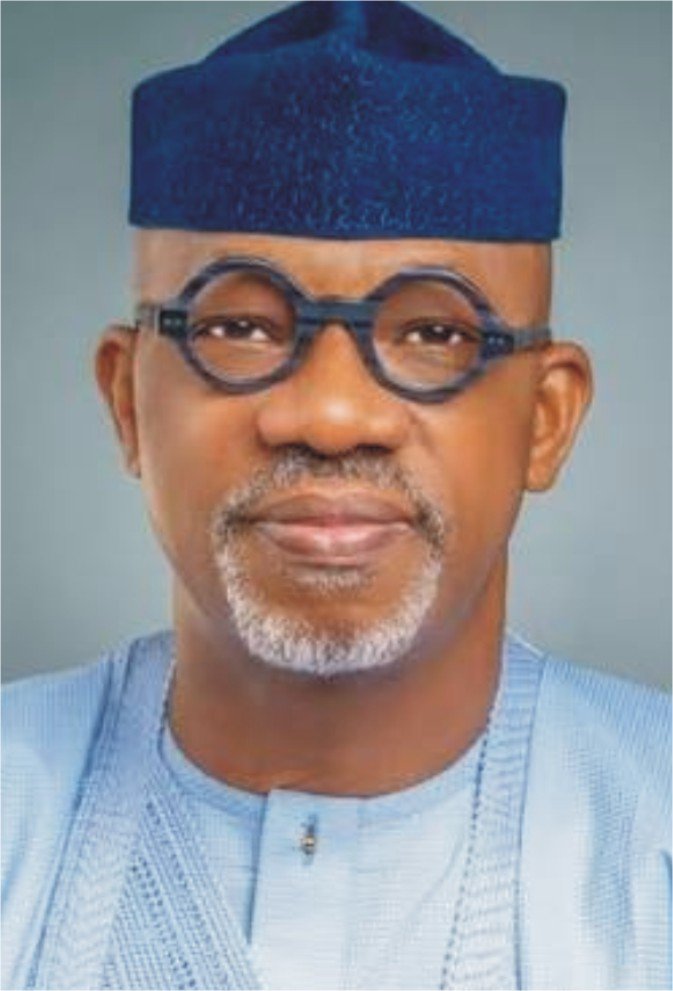
How will the next Ogun governor emerge? Who are the power brokers that will shape what will happen? We can tell you. They are Gov. Dapo Abiodun, Senator Yayi, Ladi Adebutu, Senator Gbenga Daniel, Senator Ibikunle Amosun and President Tinubu. They all fit into the unfolding struggle for Ogun State’s Government House
The battle for who succeeds Governor Dapo Abiodun in 2027 is shaping up to be more than a contest among governorship aspirants. It is also a test of political influence, party structures, old alliances, personal ambitions and the ability of powerful figures to negotiate a common position.
At the centre of the unfolding drama are 6 political heavyweights whose actions, alliances and calculations could shape the direction of the race:
They occupy different positions in Ogun politics. Some operate from within the governing All Progressives Congress (APC), others command influence through opposition politics, and some have political relationships that cut across party and factional lines.
Their interests will not necessarily coincide. Indeed, the central question is whether these influential figures can reach an understanding over the succession or whether competing ambitions will deepen divisions within their respective camps.
For Governor Abiodun, the issue is his political legacy and the transition at the end of his tenure. For Yayi, the contest concerns his governorship ambition and the support he can assemble. For Adebutu, it is an opportunity for the opposition to challenge the APC’s hold on the state. For Daniel and Amosun, the race provides another test of their enduring political relevance. And for Tinubu, the Ogun contest forms part of the wider political calculations surrounding the 2027 general election. He wants to win Ogun votes.
No single figure can legally determine who becomes governor. Ogun voters will make that decision at the ballot box. But the ability of these 6 politicians to influence party nominations, mobilise supporters, negotiate alliances and shape campaign structures makes their roles important to understanding the contest.
Gov. Dapo Abiodun occupies a central position in the succession struggle because he is the incumbent governor, controls the state’s executive machinery and remains a key figure in the Ogun APC’s political arrangements. Abiodun’s biggest political responsibility as his second term approaches its end is to help determine the shape of the transition without allowing the process to tear apart the party that brought him to power.
In April 2026, Abiodun publicly unveiled Senator Solomon Adeola, popularly known as Yayi, as the APC’s preferred governorship candidate. He presented the choice as an effort to promote party unity and give Ogun West an opportunity to produce the next governor. That decision placed Abiodun at the heart of the race. Rather than leaving the succession entirely to an open contest among competing aspirants, he helped establish the political direction in which the party would move.
His role became even more visible in September, when the Ogun APC named him Chairman of its 2027 governorship Campaign council, with Adeola as co-chairman.
What does Abiodun want from the succession?
First is his legacy. The governor will want the political transition to preserve the standing of his administration and the relationships he has built within the APC.Second is his relationship with Yayi. Having publicly backed the senator, Abiodun will be expected to help mobilise party leaders and grassroots structures behind the candidate.
Third is his own political future. Abiodun has been associated with interest in the Ogun East senatorial seat currently held by former governor Gbenga Daniel. That creates another layer of competition within the ruling party, because the succession battle at Oke-Mosan overlaps with the struggle for influence in the Senate.
The relationship between Abiodun and Daniel will therefore matter beyond the governorship election. Abiodun must also contend with dissatisfaction among party members who may feel excluded by the consensus arrangement. A candidate can receive the backing of the governor and senior party leaders, but converting that endorsement into a united campaign requires the cooperation of other stakeholders.
The big question: Can Abiodun use his position to keep the APC’s various camps working together, even where their interests in the governorship and Senate races differ?
His influence is substantial, but the ultimate electoral outcome will depend on how the party manages its internal disagreements and how voters assess the administration’s record.
Senator Solomon Yayi is the candidate at the centre of the Storm
Yayi represents Ogun West in the Senate and chairs the Senate Committee on Appropriations. His emergence has placed the longstanding demand for Ogun West to produce a governor at the centre of the 2027 contest.
Of the 6 figures examined in this report, Yayi is the one whose immediate ambition is most directly connected to occupying the Government House at Oke-Mosan. His political journey includes service in the Lagos State House of Assembly, the House of Representatives and the Senate. His move from representing Lagos West to representing Ogun West has given him a political base in the state where he now seeks the governorship.
His candidacy also connects with an issue that has remained important in Ogun politics for decades: the agitation that Ogun West should have an opportunity to produce the state’s next governor. Since Ogun State was created in 1976, its governors have come from Ogun East and Ogun Central. Ogun West has not produced a governor. Supporters of the district argue that this history makes the 2027 contest an opportunity to address a longstanding imbalance.
Yayi’s candidacy therefore rests on 2 major political propositions: his own experience and organisation, and the argument that Ogun West deserves a turn.His biggest test is statewide acceptance
The challenge is that a governorship election is not won by carrying one senatorial district alone.
Yayi must build support in Ogun West while persuading voters in Ogun Central and Ogun East that he can govern the entire state. He must also maintain working relationships with the political leaders who supported his emergence.
The party has faced internal disagreement over the process that produced Yayi.
His political challenge is thus bigger than securing the endorsement of powerful leaders. He must turn that endorsement into a broad electoral coalition.The big question: Can Yayi unite Ogun West, win the confidence of the other two senatorial districts and keep the APC’s different factions working towards a common goal?
There is PDP politician seeking another opportunity
Ladi Adebutu is one of the most prominent opposition figures in Ogun State. A former member of the House of Representatives, he contested the 2023 governorship election against Abiodun.
Adebutu occupies a different position from the other 5 figures. While the principal APC players are negotiating within the governing party, his political opportunity lies in challenging the APC’s hold on Ogun State.
The 2023 election demonstrated that he could mount a serious challenge.
At the last polls, Abiodun received 276,298 votes, Adebutu polled 262,383, while the African Democratic Congress candidate, Biyi Otegbeye, received 94,754 votes.
The gap between Abiodun and Adebutu was 13,915 votes. That result is an important part of the background to the 2027 race, although it cannot by itself establish what will happen in the next election.
Adebutu’s challenge will be to retain his existing political base, strengthen the PDP’s organisation and convince voters that the opposition is divided.
What is the role of OGD? Otunba Gbenga Daniel governed Ogun State from 2003 to 2011 and now represents Ogun East in the Senate. His political networks, particularly in the Ijebu and Remo areas, remain relevant to the state’s political calculations. Daniel is an important figure because he has experienced Ogun politics from both sides of the succession equation, as a governor who once controlled the state’s executive machinery and as a former governor now operating within the legislature and the ruling party.
His role in 2027 is particularly interesting because the governorship race intersects with a contest over the Ogun East senatorial seat.
Abiodun has been reported to be interested in that seat, while Daniel has been seeking to retain his place in the Senate. This creates a possible conflict of political interests between two men who belong to the same broad political camp. Can Daniel’s political structure influence the governorship race?
Daniel’s experience in government and his political connections in Ogun East make him an important stakeholder. But the extent to which his supporters will follow any particular political direction cannot be assumed.
Ogun East is especially relevant because it includes Ijebu and Remo communities, and because its political loyalties are not necessarily uniform. Adebutu’s performance in the 2023 election demonstrated that the district can be competitive.Daniel has also spoken publicly about the uncertainty surrounding the identity of the next governor. Daniel was quoted to have said that only God knows who would become governor between Adeola and Adebutu.
That statement is a reminder that even experienced politicians do not control the final outcome.
Daniel’s appointment as a deputy grand patron of the Ogun APC campaign council also gives him a formal role in the party’s statewide campaign.
However, the relationship between Daniel and Abiodun has experienced tensions, including over political and senatorial interests. How those competing interests are handled could affect the cohesion of the APC’s campaign structure.
How about former Ogun governor and APC power broker, Senator Amosun?
Ibikunle Amosun governed Ogun State from 2011 to 2019. He remains a prominent political figure in Ogun Central and within the APC, with a history of electoral contests and political relationships that extends across the state.Amosun’s relevance to the 2027 race comes from his experience as a former governor, his political network and his place within the APC’s leadership structure.
He knows the state’s political terrain and has previously mobilised a statewide campaign. His relationship with other party leaders, however, must be understood against the history of competition among Ogun’s political blocs.
Amosun was named a deputy grand patron of the Ogun APC campaign council alongside Daniel, while Abiodun was appointed Chairman and Yayi co-chairman.
His inclusion places him within the formal leadership of the campaign, rather than outside the party’s central structure.
.He also has his own political interests to consider. Political reporting ahead of the 2027 election has discussed competition over senatorial representation and the positioning of former governors and other party leaders. Those calculations can overlap with, but are not identical to, the governorship race.
Amosun’s relationship with Abiodun and the other APC leaders will therefore be worth watching as the campaign develops.
President Bola Tinubu is also interested in the outcome. Bola Ahmed Tinubu’s importance to Ogun politics comes from his position as President and his national leadership role within the APC. The 2027 Ogun governorship contest is unfolding alongside the presidential election, creating overlapping state and national political calculations. No examination of the Ogun APC’s political arrangements would be complete without considering Tinubu.
The President is a major national figure in the party and has longstanding political connections in the South-West. Ogun’s election will take place in the same general election cycle as the contest for the presidency, making the relationship between the state campaign and the national party’s objectives important.
The Tinubu factor can be seen in Yayi’s emergence
What can the President realistically influence? A lot.
His influence may operate through national party leadership, consultations among senior figures, relationships with political stakeholders and the broader electoral interests of the APC.
How will the national APC leadership help manage disagreements among Ogun’s powerful political blocs while allowing the state campaign to develop its own political character?
Tinubu’s position makes him an important figure in the broader calculations.
The political interests of these 6 figures may overlap in some areas and conflict in others. Their public positions, alliances and campaign activities will help explain how the contest develops, but none of them can guarantee the final outcome.
