

-
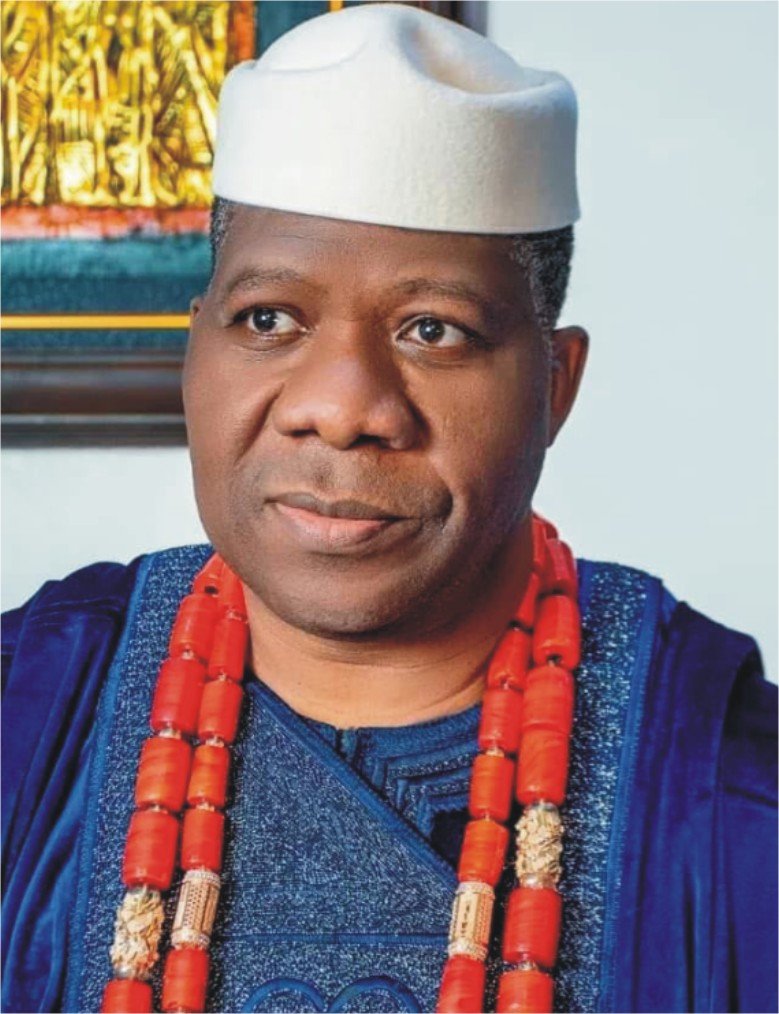
The Story Of Senator MICHAEL OPEYEMI BAMIDELE
In Iyin-Ekiti, the story of Senator Michael Opeyemi Bamidele is much bigger than the political title he carries in Abuja. It is a story about hometown pride, the expectations that accompany political power, the importance of visible community development and the growing influence of a man whose political journey has taken him from student activism to one of the most strategic positions in Nigeria’s National Assembly.
Popularly known as MOB, Bamidele has become an important political figure in Ekiti State. His rise to the position of Senate Leader in July 2023 brought him national prominence, but the relationship between the politician and his hometown had begun long before he assumed that office.
Born in Iyin-Ekiti, Bamidele’s political journey has taken him through student unionism, legal practice, human-rights advocacy, public administration in Lagos State, the House of Representatives and the Senate. Over the years, his name has become closely associated with discussions about constituency representation, infrastructure and educational development in Ekiti Central.
So, why do the people of Iyin-Ekiti hold him in such high regard? What has he done for his hometown? And why is his development record attracting attention beyond the community that produced him?
The answers lie in the combination of his political journey, reported community interventions and the opportunities created by his growing influence in national politics.
Bamidele’s political career did not begin with a senatorial ambition. His early years were shaped by student activism, legal practice and involvement in Nigeria’s political struggle.
His experience in student leadership, including his involvement with the National Association of Nigerian Students, gave him an early platform for public engagement. He later entered government in Lagos State, where he served in political and intergovernmental relations before becoming Commissioner for Youth, Sports and Social Development and subsequently Commissioner for Information and Strategy.
These appointments provided experience in public administration, political communication and the management of government programmes.
In 2011, he moved into elective representation in Ekiti, winning a seat in the House of Representatives. He subsequently won election to the Senate in 2019, where he chaired the Committee on Judiciary, Human Rights and Legal Matters during the Ninth National Assembly.
His re-election in 2023 was followed by an even more significant development: his emergence as Senate Leader of the 10th National Assembly.
The position elevated him into the heart of the Senate’s legislative leadership, giving him greater visibility and a platform from which to advocate for issues affecting his constituents.
For Iyin-Ekiti, this was an important milestone. One of its indigenes had risen to a position of national influence, creating new expectations about what that influence could mean for the town.
One of the first reasons Bamidele’s relationship with Iyin-Ekiti attracts attention is the simple fact that he is a son of the soil.
In many Nigerian communities, the success of an indigene in national politics is regarded as a collective achievement. It brings recognition to the town, strengthens its visibility and creates hopes that the community may benefit from the individual’s access to political and administrative power.
But hometown pride alone does not explain the relationship.
Historical reporting from 2014 documented community elders attributing several interventions to Bamidele, including support for a traditional palace, boreholes, school and health facilities, an ICT and vocational training centre, a library and community celebrations.
Those accounts suggest that the relationship between Bamidele and sections of Iyin-Ekiti predates his emergence as Senate Leader.
The more important question is whether such support has continued to produce useful, lasting facilities and opportunities for residents.
Available reports point to several areas in which his name has become associated with development interventions: education, roads, markets, healthcare and community infrastructure.
For residents, the difference between political promises and practical benefits is ultimately what matters.
Perhaps the most significant institutional development associated with Bamidele’s legislative advocacy is the establishment of the Federal University of Technology and Environmental Sciences, Iyin-Ekiti.
The university was formally established after President Bola Ahmed Tinubu assented to its enabling legislation on February 20, 2025. The university’s official history identifies Bamidele as the sponsor of the bill that led to its establishment.
For Iyin-Ekiti, the significance of a federal university extends well beyond the prestige of hosting a higher institution.
A university can create opportunities for students, lecturers, administrators, researchers and other workers. It can stimulate demand for accommodation, food, transportation, printing, retail and other services. It can also create an environment in which local entrepreneurs develop businesses around the needs of students and staff.
If properly developed and sustained, the institution could become a major economic asset for the town and surrounding communities.
That is why the university deserves special attention in any assessment of Bamidele’s development legacy.
The real measure of its impact, however, will emerge over time. The number of students admitted, jobs created, local businesses supported and research opportunities developed will provide stronger evidence of its contribution than the mere existence of the institution.
Another development attracting attention is the renovation of Government Science College, Iyin-Ekiti.
A report published by Punch in October 2026 put the cost of the intervention at more than ¦ 200 million and described it as an investment in improving the school’s learning environment.
The reported provision of buses for the school and the Federation of Iyin-Ekiti Students and Indigenes also points to an emphasis on supporting educational access and student mobility.
For parents and students, a school’s value is measured by the quality of its classrooms, laboratories, teachers, learning materials and general environment.
The renovation is therefore best understood not merely as a building project but as an opportunity to strengthen the school’s ability to educate young people.
Its longer-term impact will depend on proper maintenance, adequate teaching resources and improved educational outcomes.
Roads and market facilities are another part of the development story associated with Iyin-Ekiti.
Government reports have identified road and market interventions in the town among projects facilitated or associated with Bamidele’s constituency activities.
Such infrastructure can influence the daily lives of residents in ways that are often less dramatic than the inauguration ceremony itself.
A good road can improve access to shops, schools, health facilities and transport services. An organised market can provide traders with better working conditions. Public lighting can make commercial activity easier during evening hours, provided the facilities are properly installed and maintained.
These improvements can contribute to a town’s economic life, especially when combined with opportunities for education, employment and entrepreneurship.
However, it is important to distinguish individual constituency interventions from larger road projects undertaken by the state government. The Ado-Iyin dual-carriageway project, for instance, has a documented history under successive state administrations, dating back to an original award in 1978.
A credible account of Bamidele’s contribution should identify his specific role in each project rather than attributing every development in the town to him.
Healthcare is another area in which constituency development has featured prominently.
In March 2024, the Ekiti State Government included the Intensive Care Unit and Amenities Centre at Iyin-Ekiti General Hospital in its report on projects inspected across Ekiti Central.
Such facilities can be important to a community because access to appropriate emergency and critical care may influence the treatment available to patients.
Yet the value of a hospital project cannot be measured by its building alone. Equipment, medical personnel, electricity, oxygen supply, essential medicines and routine maintenance all determine whether the facility can deliver the services residents need.
For this reason, any serious investigation of Bamidele’s healthcare interventions should establish which facilities are operational, what services they provide and how patients have benefited.
Although Iyin-Ekiti remains central to Bamidele’s personal story, his political responsibility extends across Ekiti Central Senatorial District.
Reports from the Ekiti State Government have documented constituency projects in Ado-Ekiti, Aramoko-Ekiti, Erijiyan-Ekiti and other communities.
Among the projects identified were medical students’ hostels and a campus road at Ekiti State University, a digital library in Ado-Ekiti, healthcare facilities at Aramoko General Hospital and a mini-stadium and sports complex in Erijiyan-Ekiti.
The commissioning of the Ilawe-Ikogosi Link Road in October 2024 also featured in government reporting on development and cooperation between the state government and National Assembly members.
These interventions suggest that the scope of Bamidele’s constituency activities is wider than his hometown.
They also provide an opportunity to examine an important question in Ekiti politics: how can elected representatives use legislative influence to attract projects and opportunities to different communities while ensuring that development is distributed fairly?
The answer requires looking beyond individual political loyalties to the needs of the entire district.
Bamidele’s emergence as Senate Leader added another dimension to his political influence.
The position places him in a strategic role in coordinating legislative business and engaging with other political leaders. It also provides an opportunity to advocate for legislation, institutions and public investments that can benefit Ekiti communities.
But the title is not an achievement in itself. Its value depends on what is accomplished through the office.
For Iyin-Ekiti, the important question is whether this national position can continue to translate into educational opportunities, functional infrastructure, stronger healthcare services and sustainable economic activity.
For the wider senatorial district, the question is whether development interventions can be sustained across communities with different needs.
Ultimately, political leadership is most meaningful when the benefits extend beyond public ceremonies and remain useful to people in their everyday lives.
-Jamiu Abubakar
08085185886
