

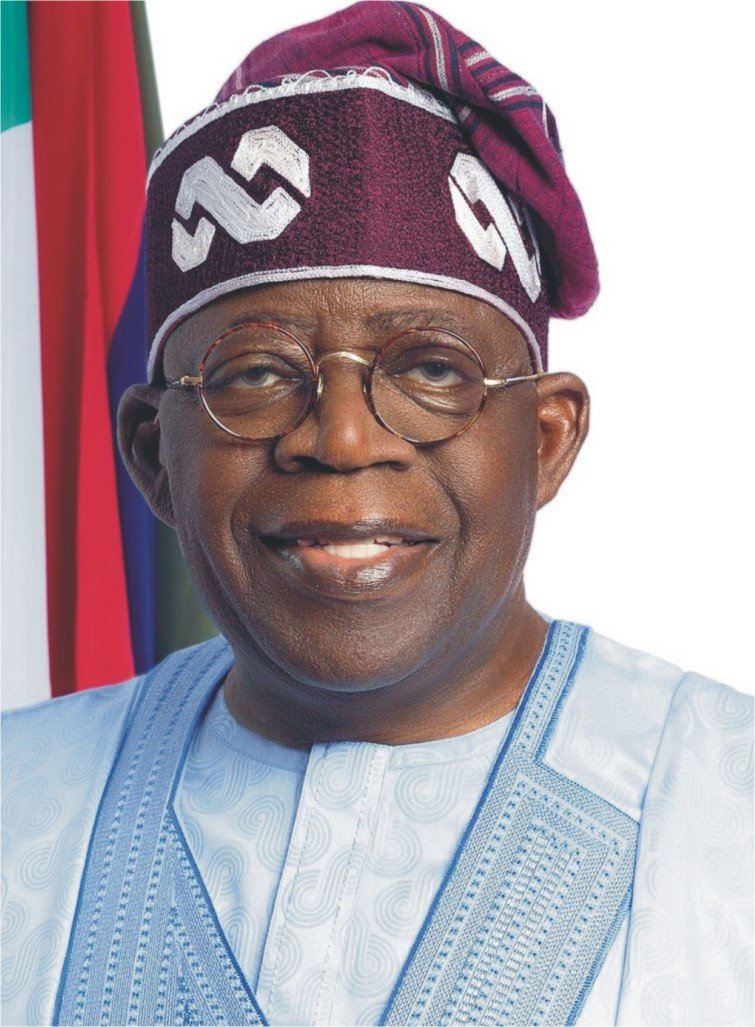
Many of the opposition members are disillushioned. They cannot win individually, they cannot agree on one candidate, and they cannot even work together, while Apc’s nationwide political structure gives it an organisational advantage.
As Atiku, Peter Obi, Kwankwaso, Amaechi, Makinde and other opposition leaders pursue different political ambitions, can they overcome their differences before the 2027 presidential election? Right now, Pres. Tinubu’s APC has an important advantage at the grassroots. Opposition politicians are facing one of the biggest political dilemmas ahead of the 2027 presidential election. They want to remove President Bola Ahmed Tinubu from power, but they are struggling to agree on how to do it.
They know that challenging the ruling All Progressives Congress (APC) individually could divide the opposition vote. They also know that presenting one presidential candidate could improve their ability to coordinate their political support. Yet, when it comes to choosing that candidate, agreeing on a political platform and deciding who controls the proposed coalition, disagreements emerge.
This is the contradiction confronting the opposition. The question is no longer simply whether Nigerians are satisfied with the Tinubu administration. It is whether the politicians seeking to replace him can organise themselves into a coherent electoral force.
The APC, meanwhile, enjoys the advantages of being the ruling party, including a large political network, influential officeholders, established party machinery and a substantial presence across the country.
APC’s biggest advantage is in the grassroots political machinery.
One of the most important advantages enjoyed by the APC is its organisational reach.
The party has a presence across Nigeria’s 36 states and the Federal Capital Territory, with political networks extending through local governments, wards and polling units.
Its influence also reaches the National Assembly, state assemblies and government institutions through elected officeholders and party leaders.
The party’s network is important because presidential elections are not won simply through television interviews, social media campaigns, press conferences or high-profile endorsements.
They require political organisation at the grassroots.
Who is mobilising voters in each local government? Who is coordinating the campaign in every ward? Who is monitoring polling-unit activities? Who is communicating with traditional rulers, community leaders, religious organisations, youth groups and other local stakeholders?
These are questions that matter during elections.
In July 2026, a Tinubu support organisation, Tinubu Lungu Lungu, announced a mobilisation structure covering all 36 states, the FCT and 774 local government areas, with coordinators extending down to wards and polling units. This is evidence of the kind of grassroots organisation being developed around the President.
However, it would be inaccurate to suggest that APC is the only Nigerian political party with a nationwide structure. The PDP, for example, has historically maintained a national organisation and elected representatives across different parts of the country.
The distinction is that APC currently combines its party machinery with the advantages of incumbency and the political networks of its officeholders.
- Why can’t the opposition win individually?
The 2023 presidential election offers an important lesson.
The results declared by INEC were:
Candidate Party Votes
Bola Tinubu APC 8,794,726
Atiku Abubakar PDP 6,984,520
Peter Obi Labour Party 6,101,533
Rabiu Kwankwaso NNPP 1,496,687
The combined votes of Atiku, Obi and Kwankwaso were considerably higher than Tinubu’s total. This illustrates the scale of the opposition vote that was distributed among different candidates in 2023.
But it does not automatically mean that combining those votes would produce the same result in another election. Voters are not the personal property of politicians. Some may not transfer their support to another candidate simply because their preferred candidate endorses him.
Nevertheless, the figures demonstrate why opposition unity has remained such an important subject.
Consider the leading political figures:
The former Vice President remains an important opposition figure with extensive political networks, particularly in the North. His emergence as the ADC presidential candidate has created a fresh challenge for those seeking a common opposition ticket.
The question is whether Atiku can persuade other major opposition figures to support his candidacy or whether he is prepared to accept a different arrangement.
Obi demonstrated considerable electoral support in 2023, particularly among younger voters and in parts of the South-East and South-South. His political following is an important factor in opposition negotiations.
But can he accept a presidential ticket led by another politician? And can his supporters be persuaded to support a candidate they did not originally choose?
Kwankwaso has a significant political network in Kano and the wider North-West. His political movement, the Kwankwasiyya, is an important factor in opposition calculations.
His insistence on protecting his political interests and the position of his supporters creates another negotiation challenge.
Amaechi has political experience, networks in Rivers State and the wider South-South, and a history of working within the APC. His role in opposition realignment is another consideration.
Makinde’s influence in Oyo politics and his involvement in opposition discussions make him an important figure in the South-West political equation. His own presidential ambitions also complicate the search for a common candidate.
These politicians have different political constituencies, ambitions and calculations. The challenge is getting them to agree on one direction.
This is perhaps the biggest obstacle facing the opposition.
Everybody talks about unity, but unity becomes difficult when the discussion moves from general principles to the presidential ticket.
Who should fly the flag?
Should it be Atiku, who has contested several times and emerged as the ADC candidate? Should it be Obi, whose 2023 performance established a substantial political following? Should Kwankwaso be considered? What about Amaechi, Makinde and other aspirants?
The October 19 report by The Guardian highlighted the disagreement between the Atiku and Obi camps, Kwankwaso’s refusal to step down for Atiku, and disagreements over the proposed single opposition ticket.
There is also the question of Zoning.
Some opposition figures believe the presidency should return to the North after Tinubu’s tenure. Others argue that the South should complete another term. Until the parties agree on a political formula, their unity discussions will remain difficult.
The opposition’s political realignment has become more complicated with the emergence of separate centres of influence.
The ADC attracted prominent politicians, including Atiku and Amaechi, while Obi and Kwankwaso moved to the NDC.
This development weakened the original expectation that the ADC would become the common platform for the leading opposition figures.
Reuters reported in May 2026 that Obi and Kwankwaso had left the ADC-led alliance amid legal disputes, internal conflicts and disagreements.
Reuters
Rather than having one agreed opposition platform, the country now has competing opposition platforms, each with its own leaders, candidates and supporters.
The ADC has Atiku. The NDC has Obi and Kwankwaso. Other parties also have their own ambitions.
Can these different political organisations cooperate without one demanding that the others surrender their identity and interests?
That is the challenge.
There is a difference between announcing a coalition and operating one.
On August 31, 2026, opposition parties met in Abuja under the G100 initiative. The ADC, NDC, PDP, APM, PRP and SDP were among the parties represented.
They discussed a common presidential candidate, a national renewal programme and a proposed four-year transition arrangement.
They also proposed working groups to develop documents covering democratic renewal, reforms, opposition cooperation and the selection of a common candidate.
But seven weeks later, the coalition had yet to announce a binding agreement on a common presidential candidate.
Reports show the unresolved questions surrounding the proposed unity documents and the selection process.
This raises an important question: Are opposition leaders genuinely interested in building a common political movement, or are they simply using coalition meetings to negotiate their individual political interests?
The problem is not necessarily a lack of meetings. It is a lack of agreement on how the coalition should operate.
Another important factor is the political influence of governors and elected representatives.
The APC has attracted politicians from several opposition parties, including governors, senators, members of the House of Representatives and influential state politicians.
These officeholders provide political networks that can be useful for mobilisation, fundraising, campaign coordination and local political negotiations.
Opposition parties, on the other hand, have experienced defections, internal disputes and disagreements over party leadership.
The PDP, which once controlled the Federal Government for 16 years, has struggled with internal divisions. The Labour Party has faced leadership disagreements, while the ADC has encountered its own organisational and legal challenges.
Political analysts have identified defections, leadership disputes and weak coordination as major problems affecting the opposition.
Many political analysts say if the Opposition wants to mount a coordinated challenge, it must address several issues.
First: Agree on a presidential candidate.
The parties must establish a transparent process for selecting one candidate. The process should have agreed rules, a timetable and a mechanism for resolving disagreements.
Second: Agree on the political platform.
They must decide whether to use an existing party or pursue a legally compliant merger. A coalition agreement alone does not create a joint presidential ticket under Nigeria’s electoral system.
Third: Agree on power-sharing.
The vice-presidential ticket, campaign leadership, regional representation and proposed government arrangements must be discussed before the election.
Fourth: Resolve the trust deficit.
Atiku, Obi, Kwankwaso, Amaechi, Makinde and other leaders must be able to trust one another sufficiently to honour agreements.
Fifth: Build a common grassroots structure.
This is particularly important because the opposition cannot depend on Abuja meetings and prominent politicians alone. It needs functional campaign organisations in all 36 states, 774 local government areas, wards and polling units.
Sixth: Present a common programme to Nigerians.
The opposition must explain what it intends to do differently on the economy, insecurity, unemployment, education, healthcare, electricity and the cost of living.
