

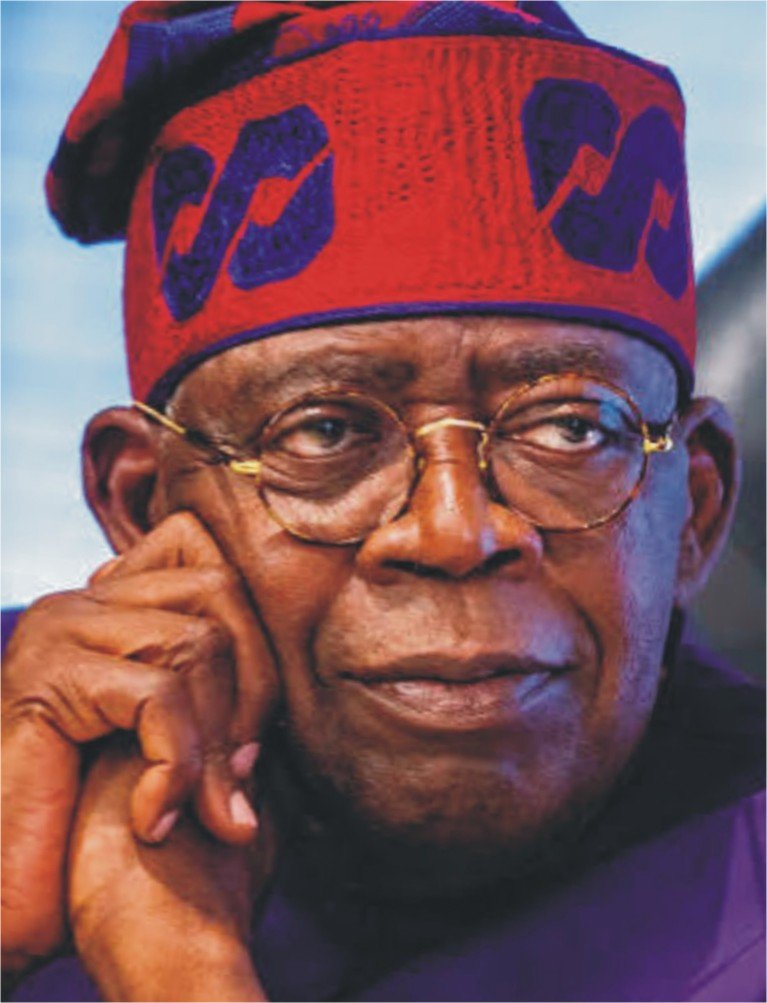
Have you ever wondered why many people often describe President Bola Tinubu as a master political strategist? We can tell you.
It is because in Nigerian politics, few political figures have generated as much discussion about political strategy, coalition-building, power calculations and the ability to anticipate political developments as President Bola Ahmed Tinubu.
Long before he became President on May 29, 2023, Tinubu had established a reputation as a politician who understood the mechanics of power. His political journey, from his days as a pro-democracy activist to his emergence as Lagos State Governor in 1999, his eight years in office, his influence in the formation of the APC and eventually his presidential victory in 2023, provides the background to the description of him as a master political strategist.
But what exactly makes Tinubu different? What were the strategic decisions that helped him win the presidency? How did he navigate opposition from powerful political interests within his own party? How has he consolidated political power since becoming President?
To understand this reputation, it is necessary to examine his political moves, the alliances he built, the battles he fought and the decisions that changed the direction of Nigerian politics.
Some of Tinubu’s decisions have produced significant political advantages.
He spent more than 2 decades preparing for the presidency.
One of the arguments often made by Tinubu’s supporters is that his presidential ambition did not begin in 2022. They insist that he has been preparing for the opportunity for many years.
His political career can be traced through several important stages.
– 1992: He was elected Senator representing Lagos West under the Social Democratic Party (SDP).
– 1993: Following the annulment of the June 12 presidential election, he became involved in the pro-democracy struggle through NADECO.
– 1999: He became Governor of Lagos State under the Alliance for Democracy (AD).
– 2003: He secured a second term despite the PDP’s sweeping victories across much of the South-West.
– 2007: He left office but retained considerable influence in Lagos politics.
– 2013: He became one of the principal architects of the APC merger.
– 2015: The APC defeated the PDP and Muhammadu Buhari became President.
– 2022: Tinubu defeated several prominent politicians to secure the APC presidential ticket.
– 2023: He defeated Atiku Abubakar, Peter Obi and Rabiu Kwankwaso to become President.
His political journey is significant because he moved from being a regional political leader to becoming a central figure in a nationwide political coalition.
Al Jazeera’s January 2023 profile described him as a powerful political kingmaker who was attempting to achieve something no Nigerian political godfather had previously accomplished: becoming President himself.
Perhaps the most important foundation of Tinubu’s political influence was Lagos.
Between 1999 and 2007, he governed Lagos State and built a political network that continued to influence the state’s politics long after he left office.
One of the things that distinguished his political approach was his emphasis on Succession.
Rather than treating the end of his governorship as the end of his political influence, he backed political successors who maintained the political platform he helped build.
The succession sequence included:
– Babatunde Raji Fashola (2007–2015).
– Akinwunmi Ambode (2015–2019).
– Babajide Sanwo-Olu (2019 onwards).
There were disagreements and political complications along the way, particularly during Ambode’s second-term ambition. But the broader Lagos political structure remained an important base for Tinubu.
This is one reason why political observers often describe him as a politician who understands the importance of building institutions, networks and loyal political relationships.
His Lagos experience gave him something valuable: a tested political network that could be expanded into a national political organisation.
APC merger was his biggest political masterstroke before becoming President.
In 2013, Tinubu played a significant role in bringing opposition political forces together to establish the All Progressives Congress.
The merger brought together:
– Action Congress of Nigeria (ACN).
– Congress for Progressive Change (CPC).
– All Nigeria Peoples Party (ANPP).
– A faction of the All Progressives Grand Alliance (APGA).
– A faction of the PDP known as the new PDP.
The political calculation was straightforward: the opposition could not easily defeat the PDP by contesting separately.
The merger created a platform that brought together Buhari’s considerable popularity in Northern Nigeria and the political networks of Tinubu and other South-West leaders.
In 2015, Buhari defeated incumbent President Goodluck Jonathan.
That election changed Nigerian political history because it marked the first time an incumbent president was defeated by an opposition party at the federal level.
Tinubu’s contribution to that political realignment remains one of the most frequently cited examples of his coalition-building approach.
Recall, how he defeated powerful opponents to win the APC presidential ticket in 2022.
This was another major test of his political calculations.
Tinubu was not the only heavyweight seeking the APC presidential ticket.
He had major opponents.
There were also powerful interests within the party who had their own preferred candidates.
Tinubu’s strategy was to engage party governors, political stakeholders, delegates and influential leaders across the country.
He also made his famous argument that he had played a major role in helping Buhari become President and had contributed to the emergence of political leaders in other states.
His declaration, “Emi Lokan” (It is my turn), became the defining slogan of his presidential ambition.
He eventually won the June 8, 2022 APC presidential primary with 1,271 votes.
Osinbajo received 235 votes, while Amaechi received 316.
The outcome demonstrated his ability to organise political support within a complicated party structure.
How about the choice of Kashim Shettima? It was a decision that generated controversy.
After securing the APC ticket, Tinubu faced another major decision: choosing his running mate.
He eventually selected former Borno State Governor Kashim Shettima.
This decision was controversial because both Tinubu and Shettima are Muslims. It produced the Muslim-Muslim presidential ticket, which attracted strong objections from Christian leaders and organisations.
Why did Tinubu make this choice?
His supporters argued that Shettima brought important political advantages:
- He had experience as a 2-term governor.
- He understood the politics of the North-East.
- He had political relationships across the Northern political establishment.
- He was familiar with security challenges in the North-East.
- He could strengthen the APC’s political appeal in an important northern region.
However, the decision also created a serious political challenge for the APC, particularly among Christian voters.
The ticket heightened religious tensions and raised questions about inclusion and representation.
The choice therefore illustrates both the calculations and the risks associated with Tinubu’s political decisions.
Recall also how he benefited from the crisis between Atiku Abubakar and the G5 governors
This is arguably one of the most consequential developments in the 2023 presidential election.
When Atiku Abubakar emerged as the PDP presidential candidate in May 2022, he faced opposition from Nyesom Wike, who had also contested the party’s presidential primary.
Wike and 4 other PDP governors formed the G5 group.
The governors were:
– Nyesom Wike of Rivers State.
– Seyi Makinde of Oyo State.
– Samuel Ortom of Benue State.
– Okezie Ikpeazu of Abia State.
– Ifeanyi Ugwuanyi of Enugu State.
Their principal demand was that the PDP National Chairman, Iyorchia Ayu, should resign because both the presidential candidate and the National Chairman came from the North.
They argued that the party should respect the principle of geographical balance.
Atiku refused to accept their demand.
The result was a serious division within the PDP at a critical period before the presidential election.
Tinubu’s political camp maintained relationships with different political interests, including Wike.
The G5 governors did not formally defect to the APC before the election, and their individual positions were not identical. Nevertheless, their refusal to campaign for Atiku weakened the PDP’s ability to present a united national campaign.
Wike later joined Tinubu’s government as Minister of the Federal Capital Territory.
Political analysts also cite how he won the 2023 presidential election despite the emergence of Peter Obi.
The 2023 presidential election was particularly interesting because, for the first time in many years, the traditional 2-party contest was seriously challenged by a third political force.
Tinubu was facing 3 formidable political opponents:
– Atiku Abubakar of the PDP.
– Peter Obi of the Labour Party.
– Rabiu Kwankwaso of the NNPP.
Peter Obi’s emergence was particularly significant. His supporters, popularly known as the Obidients, attracted considerable support among young Nigerians, professionals and voters who wanted a departure from the traditional political establishment.
Tinubu’s campaign had to contend with this new political development.
What were the important political advantages available to him?
- The APC’s nationwide political structure
The APC was already the ruling party and had an established political organisation across the country.
It had governors, senators, members of the House of Representatives, state legislators, local government politicians and ward-level structures.
This gave Tinubu access to an extensive network of political mobilisation.
- The division of opposition votes
Atiku, Obi and Kwankwaso were all seeking to displace the APC, but they were unable to form a common presidential platform.
Their political support was distributed across different geographical areas and voter groups.
This produced a 4-way contest in which the opposition vote was divided.
It is important to note that the candidates were entitled to contest independently, and there is no basis for assuming that all their supporters would necessarily have voted for one common opposition candidate.
- The South-West political advantage
Tinubu was able to consolidate much of the traditional APC political establishment in the South-West.
He won Ogun, Oyo, Osun and Ondo, although he lost Lagos to Peter Obi.
His victories in several South-West states were particularly important to his overall electoral performance.
- The North-Central and North-West calculations
Tinubu also secured victories in states outside his home region, including Benue, Kwara, Niger, Jigawa, Zamfara and Borno.
These victories demonstrated that the APC’s electoral strength extended beyond the South-West.
- The Rivers factor
Rivers State was another important political battleground.
The crisis between Wike and the PDP presidential campaign affected the political environment in the state.
Tinubu won Rivers with 231,591 votes, according to the declared results.
The G5 dispute was therefore one of the important developments in the election, although the wider Rivers political contest involved several other factors.
What the final election figures revealed.
Tinubu won by approximately 1.81 million votes over Atiku.
He secured 12 states, the same number as Atiku, while Obi also won 12 states when the FCT is included in the reported tally.
The figures show that Tinubu’s victory was not the result of winning every major region. It was the result of assembling enough votes across different parts of the country to finish ahead of his opponents.
There is another important statistic: Nigeria had 93.47 million registered voters, but only 25.29 million accredited voters. Turnout was approximately 27.05 per cent of collected PVCs.
This means the 2023 election was won in a relatively low-turnout environment, a fact that remains important when examining the breadth of the winning mandate.
How about the issue of the Naira redesign crisis? This is the story of how Tinubu turned a political challenge into a campaign issue
The naira redesign and cash scarcity crisis that occurred shortly before the 2023 election created an unusual political situation.
The policy was introduced under President Muhammadu Buhari’s administration and generated widespread complaints.
People struggled to access cash. Businesses suffered, transport operators complained and ordinary Nigerians experienced difficulties making payments.
Tinubu publicly criticised the policy and suggested that powerful interests were working against his presidential ambition.
His campaign used the controversy to position him as a candidate willing to challenge decisions that were unpopular with Nigerians.
This was politically significant because Tinubu was the candidate of the ruling party, yet he publicly disagreed with an important policy of the outgoing APC administration.
It created an interesting distinction between his relationship with the ruling party and his relationship with the outgoing President.
Also interesting was the removal of fuel subsidy immediately after winning
On May 29, 2023, Tinubu made one of the most consequential announcements of his presidency during his inauguration.
He declared that fuel subsidy was gone.
The announcement surprised many Nigerians because it came immediately after he was sworn in.
The decision was a major departure from the previous approach to petrol pricing and government spending.
His administration argued that subsidy payments were financially unsustainable and that the money could be redirected towards infrastructure, education, healthcare and other public services.
The removal was followed by a sharp increase in petrol prices and widespread economic hardship.
His government also began moving away from the multiple exchange-rate system, with significant consequences for the naira and the wider economy.
From a political-strategy perspective, this was a demonstration of his willingness to take politically difficult decisions at the beginning of his tenure rather than postpone them.
He brought Nyesom Wike into his government despite Wike belonging to the PDP
This was another important political development.
When Tinubu announced his cabinet, he appointed Nyesom Wike, a leading PDP politician and former Rivers State governor, as Minister of the Federal Capital Territory.
Why was this significant?
Wike was not an ordinary opposition politician. He had a substantial political network, considerable influence within the PDP and relationships with politicians across the country.
His appointment created an unusual situation in Nigerian politics.
A major opposition figure was now serving in an APC-led federal government.
Wike continued to maintain his political identity within the PDP, even as his relationship with the party’s presidential leadership remained strained.
His presence in the Federal Executive Council also gave Tinubu access to a political relationship that extended beyond the APC.
Critics have interpreted this arrangement as a way of weakening the opposition. Others regard it as an example of political accommodation and inclusive government.
See how he moved to consolidate control of the APC after becoming President.
Many politicians believe that winning an election is only one part of the struggle for power.
The other part is controlling the political party that brought you to office.
After Tinubu became President, the APC went through significant leadership changes.
Abdullahi Adamu, who was national chairman when Tinubu won the party’s presidential primary, eventually left the position.
Abdullahi Ganduje subsequently emerged as national chairman in 2023.
In July 2025, Ganduje resigned, and Nentawe Yilwatda emerged as his successor.
These changes took place amid disagreements about party leadership, regional balancing and the distribution of political influence.
Tinubu’s relationship with the APC leadership became increasingly important because the party’s national officers, governors and lawmakers would all play significant roles in his administration and future political ambitions.
The appointments of party officials to government boards and agencies also helped give important party stakeholders a stake in the administration.
The political significance is that Tinubu’s administration placed considerable emphasis on maintaining a working relationship between the presidency and the APC’s national machinery.
Another example is his approach to governors. It was a master stroke. He gave them a stake in the political system
Another feature of Tinubu’s political approach has been his relationship with state governors.
Nigeria’s governors are extremely important in electoral politics because they influence party organisation, local political networks and the mobilisation of supporters.
Tinubu understands this political reality.
His administration has overseen the removal of fuel subsidy, which substantially increased the revenue distributed to the three tiers of government through FAAC.
In 2024, FAAC disbursements reached approximately N15.26 trillion, according to figures reported by Premium Times.
The increase in available allocations gave many state governments additional financial resources, although states still faced serious development and fiscal challenges.
Tinubu has also engaged governors from opposition parties over major national policies, including the tax reform bills.
His approach has generally involved negotiation rather than allowing disagreements to become permanent political confrontations.
The relationship between the presidency and governors has become a major part of his political consolidation strategy.
The early 2027 endorsement has helped. Tinubu moved to secure his party’s ticket well ahead of the election
One of the most interesting political developments of 2025 was the APC’s early endorsement of Tinubu as its preferred presidential candidate for the 2027 election.
At a national political gathering, APC leaders endorsed him as the party’s sole presidential candidate for the next election.
The motion was moved by Imo State Governor Hope Uzodimma and seconded by Kaduna State Governor Uba Sani. Other party leaders, including Senate President Godswill Akpabio, supported the position.
Why was this politically important?
First, it sent a message to potential challengers within the APC that the party leadership was already organising around Tinubu.
Second, it reduced the possibility of an open contest between several presidential aspirants within the ruling party.
Third, it gave the President an opportunity to concentrate on building relationships with governors, legislators and party stakeholders ahead of the next election.
How about the wave of defections from opposition parties into the APC
Another development that has attracted considerable attention is the movement of prominent opposition politicians into the APC.
The ruling party has benefited from defections by governors, federal lawmakers, state lawmakers and other political stakeholders.
These movements have significantly changed the balance of party politics in Nigeria.
The development is particularly important because governors are not merely individual politicians. They often have extensive networks involving local government chairmen, commissioners, legislators, party executives and grassroots political organisers.
When a sitting governor changes political parties, the movement can trigger further political realignments.
In March 2026, Tinubu reportedly instructed the APC’s new National Working Committee to intensify efforts to attract more opposition politicians into the party.
He also argued that he did not support a one-party state, maintaining that politicians had the constitutional freedom to associate with whichever party they chose.
The political implications are significant: the APC has expanded its geographical reach, while opposition parties have faced the challenge of retaining their political structures.
How about his ability to maintain relationships with political enemies
One of the interesting features of Tinubu’s political career is his willingness to engage politicians with whom he has previously had disagreements.
This political approach has helped him maintain relationships across different political camps.
It also reflects the importance he attaches to political negotiation.
Perhaps the most interesting thing about Tinubu is that his political career has involved 3 distinct roles.
First, he was a political survivor.
He survived the difficult years following the annulment of the June 12 election, military rule and the transition to democracy.
Second, he became a political kingmaker.
He built political relationships, supported candidates, helped organise the APC merger and became an influential figure in national politics.
Third, he became President.
In 2023, he achieved the ambition that had occupied his political calculations for many years.
Now, as President, his focus has increasingly included consolidating his party, maintaining relationships with governors, managing opposition realignments and preparing the APC for the 2027 election.
His supporters call him a master strategist because they believe he rarely approaches political contests as isolated events. They see a politician who builds relationships over many years, identifies political opportunities, negotiates with powerful interests and positions himself for future contests.
One thing is clear from the historical record: Tinubu’s rise to the presidency was not a sudden political development. It followed decades of political organisation, alliances, setbacks, negotiations and electoral contests.
From Lagos Governor to APC kingmaker, from Buhari’s political ally to Nigeria’s President, Tinubu’s story is one of the most consequential political journeys in Nigeria’s Fourth Republic.
