

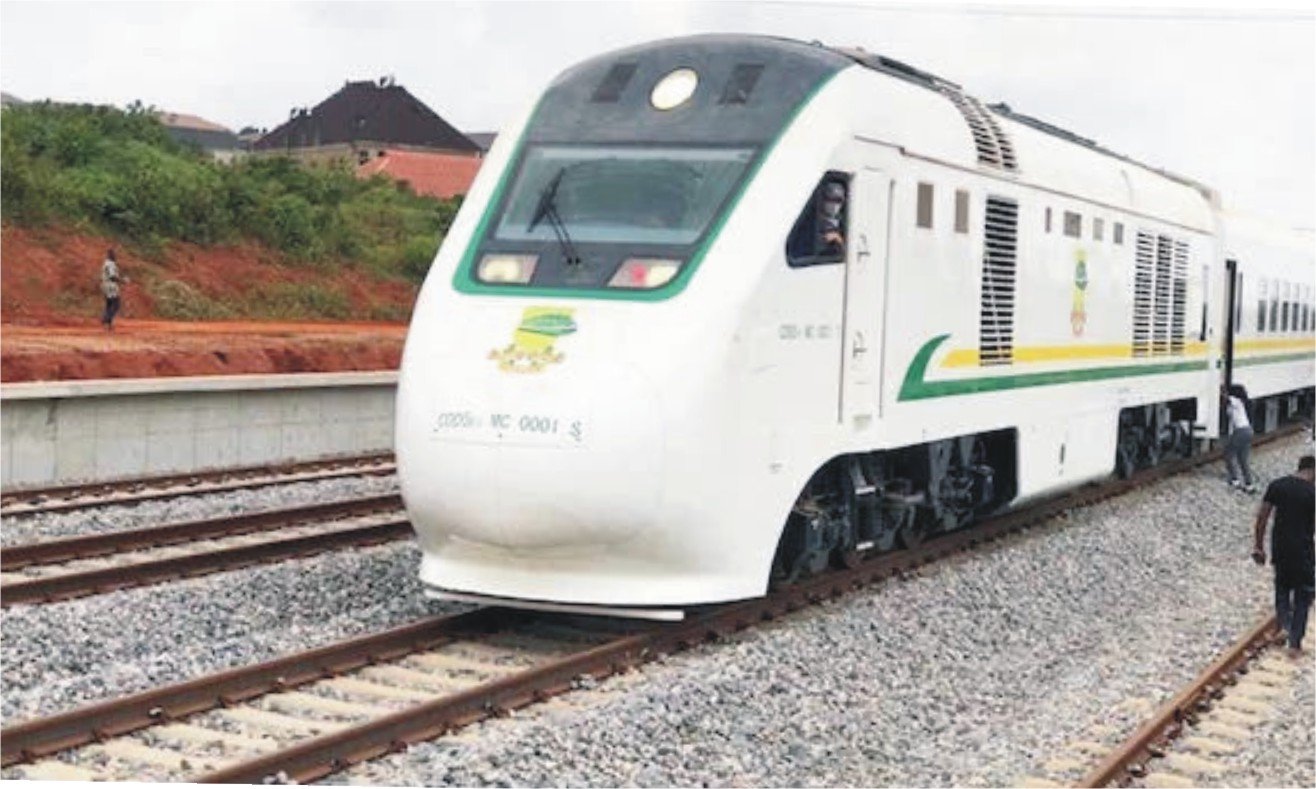
The modern railway service is part of Nigeria’s renewed effort to restore a transportation system that once played a major role in connecting communities, moving agricultural produce and supporting commercial activities across the country.
The railway’s history goes much further back than the modern trains now operating between Lagos and Ibadan. Railway development in Nigeria began in 1898, when construction of the first railway line from Lagos to Ibadan commenced under the colonial administration. The 193-kilometre line was completed in 1901 and became an important part of the country’s early transportation system.
In those days, the railway was primarily designed to move agricultural produce, minerals and other goods from the hinterland to the seaports. It also provided an affordable means of transportation for people travelling between different communities. As the network expanded, it connected important commercial centres and helped businesses move their products across the country.
The railway system later became known as the Government Railway before the Nigerian Railway Corporation was established through the Nigerian Railway Corporation Act of 1955. Following independence, the railway remained an important national asset, but years of neglect, poor maintenance, inadequate investment and ageing locomotives gradually affected its operations.
By the 1980s and 1990s, the corporation was struggling with serious operational challenges. Railway infrastructure deteriorated, locomotives became unreliable and passenger services lost much of their attraction. Many Nigerians who once depended on trains began turning to private cars and commercial buses.
There were attempts to rehabilitate the railway network, including railway modernisation plans introduced in 2006. However, the major push towards modern standard-gauge railway development gained momentum under successive administrations, particularly during the Muhammadu Buhari administration, which made railway infrastructure one of its major transportation projects.
The Abuja-Kaduna standard-gauge railway was commissioned for commercial operations in 2016, while construction of the Lagos-Ibadan standard-gauge railway began in 2017. The latter was completed and commissioned in 2021. These developments represented an important stage in the Federal Government’s attempt to reposition the Nigerian Railway Corporation and restore public confidence in rail transportation.
The Lagos-Ibadan railway project was executed by the Federal Government in partnership with the China Civil Engineering Construction Corporation (CCECC). It covers approximately 157 kilometres of standard-gauge railway infrastructure and was designed to improve the movement of passengers and freight.
Before its full commercial launch, passenger operations on the new Lagos-Abeokuta-Ibadan standard-gauge line commenced in December 2020. The service was subsequently officially commissioned for commercial operations by former President Muhammadu Buhari on June 10, 2021, at the Mobolaji Johnson Railway Station in Ebute Metta, Lagos.
At the commissioning, Buhari described the achievement as “another milestone in the drive of this Administration to revitalize the railway system and establish it as a choice mode of transportation for both passengers and freight.”
He explained that the railway would provide an important connection between Lagos, Ogun and Oyo States, allowing people to work or conduct business in Lagos while residing in neighbouring states.
In his speech, the former President also highlighted the importance of the railway to the transportation of goods and the country’s economy.
“This vital line establishes an end-to-end logistic supply chain in railway transport within its short corridor, Lagos-Ibadan, as goods to the hinterland would now be transported by rail directly from the Apapa port Quayside straight to the Inland Container Depot located in Ibadan from where it can be distributed to other parts of the country,” Buhari said.
Shortly after the inauguration, Buhari took a train ride from Ebute Metta to the Energy Nature Light (ENL) Terminal at Apapa Port in Lagos.
The significance of the project was not limited to the construction of railway tracks. It was also about bringing back a transportation system that Nigerians had gradually lost confidence in and making it attractive enough for people to consider it again.
One of the most important things about the railway is the relief it offers people who regularly travel between Lagos and the two neighbouring states.
Anyone who has travelled along the Lagos-Ibadan Expressway knows how frustrating the journey can become. The situation can be particularly difficult when there are accidents, broken-down vehicles, road repairs or heavy commercial activities along the highway.
For motorists, there is the additional expense of fuel, vehicle maintenance and the possibility of spending several hours behind the steering wheel. Commercial bus passengers also have to deal with fluctuating fares, crowded vehicles and the uncertainty of arrival times.
The train provides another option. Rather than having every passenger depend on a private vehicle or commercial bus, a single train can transport hundreds of people in one journey.
This has the potential to reduce the number of individual cars and other vehicles on the road, particularly when more people embrace the service. It can also reduce the pressure on the Lagos-Ibadan Expressway and encourage people to consider public transportation.
However, there is no verified figure establishing how many private cars have been removed from the highway specifically because of the train. What is clear is that the railway offers a genuine alternative to road transportation and can help reduce dependence on private vehicles as passenger numbers increase.
The positive reactions of passengers have also helped make the train attractive. In published reports, some travellers have commended the comfort, air-conditioning, convenience and opportunity to avoid the stress of road transportation.
These experiences show that although the introduction of online booking has made ticket purchasing more convenient, the corporation must continue improving the platform to ensure passengers can complete transactions without difficulties.
Other passenger reports have highlighted the spacious coaches, air-conditioning and the ease of travelling along the newly constructed tracks. Some travellers have also expressed their willingness to pay for the service because they consider the comfort worthwhile, particularly when compared with the difficulties associated with travelling on the Lagos-Ibadan highway.
For someone travelling for business, the railway offers an opportunity to make the journey less tiring. A trader going to Abeokuta can plan a journey without worrying too much about road traffic. A student travelling to Ibadan can choose a more organised means of transportation, while a family visiting relatives can enjoy the journey together.
The NRC has also continued to work on improving the quality of its services. Customer service, maintenance, ticketing procedures, communication and passenger feedback are important areas that require attention if the corporation wants to attract more Nigerians to railway transportation.
Of course, the service still has areas that require improvement. Better access to railway stations, improved frequency of trips, consistent punctuality, effective maintenance and more convenient ticketing arrangements will make it even more attractive. The corporation must also ensure that the quality passengers enjoy today is maintained in the years ahead.
Nevertheless, the return of modern railway transportation has given Lagos residents and people living in Ogun and Oyo states another option for travelling between these important commercial centres.
Beyond the fares, departure times and different classes of coaches, the greatest attraction is the opportunity to travel without the familiar stress of the highway. It is a journey that allows passengers to sit back, relax, enjoy the scenery and arrive at their destination with less physical exhaustion.
For a country that once watched its railway system deteriorate after decades of neglect, the modern Lagos-Ibadan service represents an important step towards restoring public confidence in train transportation.
And for many people who have discovered the convenience of travelling by rail, the journey to Abeokuta and Ibadan is no longer just about reaching a destination. It is also about enjoying the experience along the way.
By Benprince Ezeh
08068599879
