

-
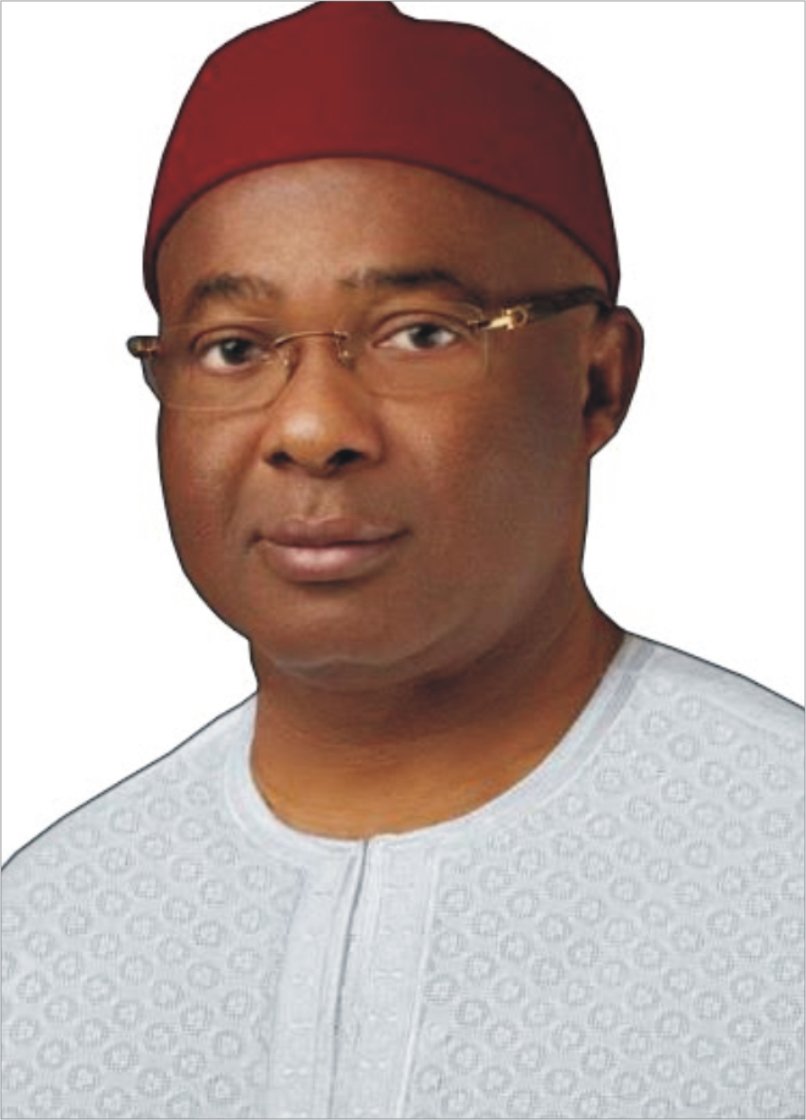
Gov. HOPE UZODIMMA Explains
Governor Hope Uzodimma of Imo State has explained the different approaches his administration has adopted to stimulate economic growth, improve infrastructure, create employment opportunities and strengthen grassroots businesses, saying that sustainable development can only be achieved when local economies are empowered to thrive.
The governor made this known while delivering the keynote address at the Lagos Country Club Policy Dialogue with Government Leaders, held on Friday, November 13, 2026. The dialogue had as its theme, “The Future Is Local: Stimulating Grassroots Economies for Inclusive Growth.”
Speaking before members of the prestigious club, Uzodimma explained that his administration had deliberately shifted attention towards developing communities, strengthening local businesses and creating economic opportunities outside the major commercial centres.
He maintained that the future of Nigeria’s economic development lies in building stronger local economies rather than concentrating opportunities in a few major cities.
Governor Hope Uzodimma, popularly known as Hope Uzodimma, is a politician and businessman who represents Imo State. He became governor in January 2020 and was re-elected for a second term in November 2023. Before becoming governor, he served as a senator representing Imo West Senatorial District in the National Assembly. He has also been involved in business and public service, with political experience spanning several years. As governor, he has focused on infrastructure development, security, revenue generation, digital transformation, education and investment promotion.
Welcoming his audience, the governor expressed appreciation to the president of Lagos Country Club, Mr Seyi Adewunmi, the Board of Trustees and members of the club for inviting him to deliver the inaugural lecture in the new series.
He described the invitation as a great honour, particularly because the institution had been part of Lagos life since 1949.
“The theme, ‘The Future Is Local: Stimulating Grassroots Economies for Inclusive Growth’, is both timely and significant. It challenges us to look beyond the familiar centres of commercial activity to the possibilities in our towns and communities across Nigeria,” he said.
He described Lagos as a symbol of enterprise, ambition, innovation and resilience, noting that the state attracts people, businesses, capital and ideas from across Nigeria and beyond. However, he pointed out that the success of Lagos was inseparable from the communities that supply its workforce, food, entrepreneurs and investment capital.
Using Lagos Country Club as an example, Uzodimma observed that the club began in an aircraft hangar with about 100 members but had grown into a family of more than 2,500 members.
According to him, many of those members came from towns and villages across the country, but their economic and social connections with their places of origin remained strong.
“Many of you came from towns and villages across the federation. Yet few have ever really left home. A good part of what is earned here in Lagos flows back through social investments. The house in the hometown which all of us are building, the school fees paid and the community projects funded. The flow of money and loyalty is one of the most enduring economic links in this country,” he stated.
The governor recalled a survey his research team conducted two years earlier for a lecture at the Yoruba Tennis Club, which revealed that 85 per cent of respondents did not believe Nigeria offered citizens equal opportunities to thrive.
He said addressing this inequality was the essence of inclusive growth, stressing that the country could not achieve meaningful development if economic opportunities remained concentrated in a few urban centres.
“Many Nigerians live far from the commercial centres, and whether they prosper depends on the economies of those places. That is where Nigeria’s next phase of growth must come from, the local,” he said.
He challenged Nigerians to imagine what would happen if the communities from which people migrate to Lagos and other major cities became stronger centres of production, enterprise and economic opportunities.
According to him, Nigeria’s growth would only be sustainable when it was built on the strength of its many local economies, with government providing the necessary foundations and private investors converting those foundations into productive enterprises, jobs and prosperity.
Uzodimma explained that grassroots economies comprised farms, markets, workshops, small businesses and services through which ordinary Nigerians earned their livelihoods. He added that inclusive growth meant ensuring that economic progress was fairly distributed across society.
He warned against celebrating economic growth based only on national figures when the living conditions of ordinary citizens and communities remained unchanged.
The governor also drew attention to the concentration of economic activities in Lagos, citing an analysis of federation account records by Daily Trust, which indicated that Lagos generated about 52 per cent of all non-import Value Added Tax collected in Nigeria in the previous year, while Rivers State, the next highest, generated roughly a quarter of Lagos’ figure.
While acknowledging Lagos’ remarkable achievements, he argued that a country with more than 200 million people could not depend on such a narrow economic base.
He explained that the concentration of businesses in major cities was understandable because companies needed access to customers, suppliers, skilled workers and other facilities. However, he warned that problems arose when people moved faster than cities could create jobs and when their communities of origin were abandoned instead of developed.
He cited Lagos’ housing challenges as an example, noting that the state received about 600,000 new residents annually, while its housing deficit had reached approximately 3.4 million units.
He also referred to National Bureau of Statistics figures showing that about 72 per cent of rural Nigerians were poor, compared with 42 per cent of those living in cities, with rural communities accounting for about 80 per cent of the country’s poor population.
According to him, the consequences of neglected local economies extend beyond poverty, as young people are forced to migrate to cities or remain in their communities without productive activities.
“When local economies sit idle, the consequences do not stay local. Young people leave for the cities, the big cities, or stay behind with nothing productive to do. That idleness has a way of finding the wrong employers. Crime and insecurity feed on them,” he said.
He maintained that providing young people with meaningful economic opportunities in their communities was one of the best ways to address insecurity.
Turning to what his administration had done differently in Imo State, Uzodimma said the first priority was to establish the necessary infrastructure for businesses and communities to prosper.
He explained that when his administration came into office in 2020, many roads across Imo State had deteriorated badly, leaving entire communities disconnected from markets and economic activities.
“We decided to embark on the development and provision of infrastructure. We have since built more than 130 roads,” he said.
Among the roads he mentioned were the Owerri-Olu, Owerri-Oguta, Owerri-Onitsha, Owerri-Port Harcourt and Owerri-Mbaise-Akokwa-Oga roads.
He said the improvement in road infrastructure had immediately strengthened trade and movement between communities, making it easier for farmers, traders and businesses to transport their goods.
The governor also identified electricity as one of the biggest challenges facing businesses in Nigeria, explaining that his administration decided to take advantage of the electricity sector reforms introduced in 2023, which allowed states to regulate their own electricity markets.
He disclosed that in February 2026, as part of the Imo State at 50 celebrations, his administration commissioned the first phase of the Orange Power Project under the Light Up Imo programme.
The project is operated by an indigenous electricity company, Orange Electricity, in partnership with Egypt’s Marco Holdings. It includes 15MVA and 30MVA injection substations as well as a new electricity distribution network along the Owerri axis.
According to him, the project has already started reducing the cost of electricity for businesses.
“A hotel in Imo recently told a journalist that its electricity expenses have fallen by over 70 per cent thanks to Orange Power. Our aim is to take the generator out of the cost of doing business in Imo State. We are only at the first phase, but the progress has been tremendous,” he said.
Uzodimma further explained that his administration was using digital technology to improve land administration and make it easier for residents and investors to conduct business.
He said the Imo State Land Information System had replaced the old paper-based process, which was slow and vulnerable to fraud. Residents could now search land records and pay taxes through the My Imo App.
Referencing the work of Peruvian economist Hernando de Soto, particularly his book, The Mystery of Capital, the governor explained that many poor people in developing countries possessed valuable land and properties but could not use them effectively because they lacked proper documentation and recognised titles.
He said secure land titles would enable property owners to sell confidently and investors to commit capital without fear of disputes.
“In the absence of that, he called it dead capital. Most of our communities’ wealth is held in that form, and every title we register brings some of it back to life. That is why we treat land administration as an economic policy,” he explained.
He disclosed that the state’s digital reforms had earned recognition from the National Information Technology Development Agency and Cisco. His administration was also working towards extending fibre and 5G coverage across all 27 local government areas, with Imo Digital City serving as a flagship project.
The governor also highlighted the importance of Sam Mbakwe International Cargo Airport, Owerri, saying the airport recorded its first international flight in its history in May 2025. He said his administration intended to develop it into a cargo gateway for the Southeast, which would support trade, investment and the movement of agricultural produce.
On the importance of small businesses, Uzodimma cited a national survey conducted by the Small and Medium Enterprises Development Agency of Nigeria and the National Bureau of Statistics, which identified close to 40 million micro, small and medium enterprises in the country.
He said these businesses accounted for nearly half of Nigeria’s Gross Domestic Product and generated close to nine out of every 10 jobs.
However, he noted that many remained small and informal because of unreliable electricity, expensive financing, poor roads, multiple taxation and the high cost of dealing with government.
He argued that government should concentrate on reducing the cost and risks of doing business rather than attempting to determine which businesses should succeed.
He identified the Orashi Special Energy Free Trade Zone as one of the initiatives designed to attract private investment into Imo State. According to him, the zone has a 15-year operating licence from the Oil and Gas Free Zone Authority and an approved master plan, allowing investors in the gas and energy sectors to process and add value to resources close to their source.
Agriculture, he said, remained the largest employer in grassroots economies, and the greatest opportunity lay in processing agricultural produce rather than merely selling raw materials.
He particularly identified the palm oil value chain as an area with enormous investment potential, explaining that Imo had the land and resources required to support plantation development, processing and refining.
“We have a market of national scale. Investors are willing to come to Imo, and we are preparing the environment for big investors and small investors to come into Imo State,” he said.
He also mentioned the rehabilitation of the former Imo Concorde Hotel in Owerri, now operated by Doubletree by Hilton, as part of the efforts to improve the state’s hospitality and business environment.
Uzodimma recalled that his administration, with support from the Federal Government, hosted the first Imo Economic and Investment Summit in December 2025, bringing together investors from Nigeria and abroad.
He acknowledged the economic reforms of President Bola Ahmed Tinubu, particularly the removal of the petrol subsidy and the unification of the foreign exchange market, saying they had increased the resources available to states through the Federation Account.
He added that Imo State had also improved its internally generated revenue through its own efforts.
According to him, the state’s internally generated revenue reached N43.6 billion in 2025, while its monthly collections had increased from an average of about N500 million in 2019 to more than N4.5 billion.
He said Imo ranked third nationally in revenue growth between 2019 and 2025, recording an increase of more than 600 per cent.
The governor further disclosed that his administration had increased the minimum wage for workers in the state to N104,000, which he described as the highest in the country.
He explained that paying workers better wages was also a deliberate grassroots economic policy because salaries earned in towns and communities were spent in local markets, shops and businesses.
“A well-paid workforce is one of the quickest ways to put money into circulation at the grassroots,” he said.
Another major area he highlighted was human capital development, particularly through the SkillUp Imo programme, which he said had trained more than 75,000 young people in software development, cybersecurity, artificial intelligence and other digital skills.
He explained that digital skills centres had been established across the state’s 27 local government areas, providing young people with opportunities to acquire skills that could make them competitive in the global economy.
Through SkillUp Imo and other digital economy initiatives, he said, his administration had created more than 80,000 jobs and income-generating opportunities.
These opportunities included salaried employment, remote jobs, freelancing and businesses established by programme graduates.
He disclosed that more than 1,000 graduates had secured jobs through the state’s freelance platform, while over 30 startups had emerged from the programme.
The Imo Talent Hub, he added, was connecting young people to remote employment opportunities with companies across the world.
“Our young people do not need to move to Lagos to earn a Lagos salary anymore, and many no longer do,” he declared.
The governor also spoke about healthcare, explaining that his administration had expanded access to the Imo State Health Insurance Scheme, which aims to cover 2.5 million residents.
He said the initiative was important because families without access to affordable healthcare could lose their savings and livelihoods because of a single illness.
He also disclosed that the University of Innovation, Science and Technology was established in Imo State in August 2025 to develop the technical knowledge and skills required by local industries.
Beyond infrastructure and digital development, Uzodimma said his administration had recognised the importance of community-based institutions in driving economic growth.
He argued that government policies would achieve better results when they were designed around the existing social structures that people already trusted, including kindreds, town unions, cooperatives and other community organisations.
He specifically praised the traditional Igbo Apprenticeship System, which has for generations trained young people under established businessmen before helping them establish their own businesses.
According to him, the system has produced successful entrepreneurs across Nigeria, including in Lagos, and demonstrates how communities can organise themselves to create wealth and employment.
“The Igbo Apprenticeship System has for generations taken young people into a master’s business. The master trained them for years and then set them up on their own, often with capital from the very person who trained them. It has been widely acknowledged as one of the most effective systems of enterprise development this country has ever produced, built entirely by communities,” he said.
He maintained that government should build on such existing institutions rather than introduce new structures and expect people to trust them immediately.
He also referenced the work of Nobel Prize-winning economist Elinor Ostrom, who demonstrated how communities could successfully manage shared resources when they had clear rules, fair benefit-sharing arrangements and a voice in decision-making.
Uzodimma said this thinking informed the introduction of the One Kindred, One Business initiative, popularly known as OKOBI, in 2022.
Under the programme, a kindred, social group or student club establishes a registered business that it collectively owns and manages for profit, with government providing training, technical assistance and access to finance.
He explained that the model was designed to ensure that businesses belonged to entire groups rather than individuals, allowing members to share profits and maintain collective responsibility for their success.
“Members share in the profits, and because the business belongs to the group rather than to any one person, it cannot lose the enthusiasm of its founders,” he explained.
By the end of 2025, he said, more than 600 OKOBI businesses had been registered in Imo State, with close to 20,000 members spread across all 27 local government areas.
He added that the initiative had attracted the attention of the London School of Economics and had received Federal Government approval for adoption across the country.
The governor also called on local governments to become more active in stimulating economic activities within their areas.
He said local councils controlled markets, motor parks and feeder roads and were directly involved in the permits and levies paid by small businesses.
According to him, these responsibilities should be used to promote economic development rather than create unnecessary difficulties for traders and entrepreneurs.
He also referred to the Renewed Hope Ward Development Programme, adopted by the National Economic Council in July 2025, which seeks to create jobs across Nigeria’s 8,809 wards.
He said initiatives such as OKOBI could provide a practical route for delivering economic opportunities to communities at the grassroots.
However, the governor acknowledged that his years in office had also taught him important lessons, particularly about the relationship between security and economic development.
He said security must come before every other economic policy because no investor would commit money to an environment where lives and property were not protected.
He recalled that Imo State was once among the most troubled states in the country, making it difficult to attract investors.
To address the situation, he disclosed that his administration established the Imo State Vigilance Service Organisation in January 2026, with 7,000 operatives working alongside Federal Government security agencies.
Although he admitted that insecurity in the Southeast had not been completely eliminated, he said the situation in Imo had improved tremendously.
He also acknowledged that some major projects had taken longer than expected, particularly because of the need for private-sector partnerships.
He cited the revival of Ada Palm, one of the largest palm plantations in West Africa, as a project whose progress had been slower than anticipated.
He also mentioned the proposed Orashi Waterway project, which is expected to provide the region with access to the Atlantic Ocean, saying it was still awaiting dredging.
He maintained that both projects remained open to investors with the patience and financial capacity to support their completion.
Concluding his address, Uzodimma stressed that government should create the right platforms, provide the necessary support and allow experienced private-sector operators to run businesses.
He said the experience of Imo State had reinforced his belief that economic development could not be achieved by government acting alone.
According to him, the most effective approach was to build infrastructure, improve security, provide electricity, strengthen digital access, develop human capital and create an enabling environment for private investment.
His central message to the audience was that Nigeria’s economic future would not be determined by the success of Lagos, Abuja or other major commercial centres alone, but by the ability of communities across the country to become productive, self-sustaining centres of enterprise.
He maintained that when grassroots economies became stronger, migration pressures would reduce, more young people would find meaningful employment at home, businesses would expand and the benefits of national economic growth would reach more Nigerians.
By Benprince Ezeh
08068599879
