

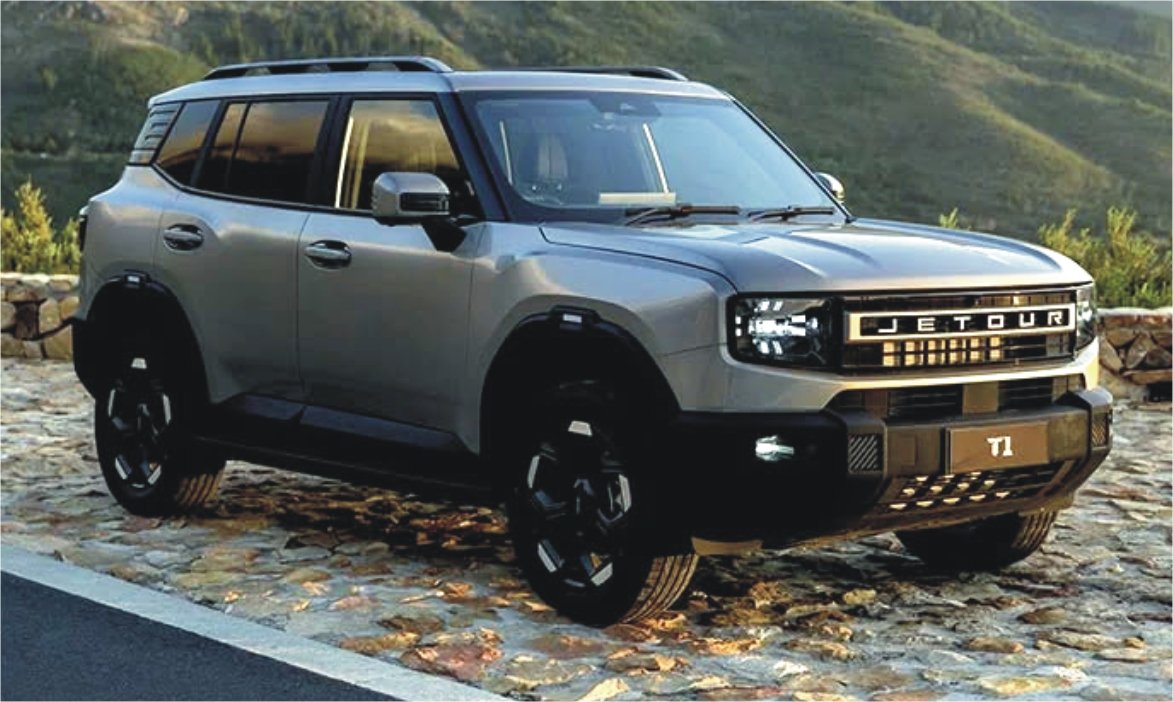
There is a new development gradually changing the Nigerian automobile market. It is coming from China. For decades, Nigerians grew up believing that Toyota, Honda, Mercedes-Benz, Lexus, Nissan, Hyundai and Kia were the major car brands worth buying. Whether someone wanted a small family car, an executive vehicle, a luxury SUV or a vehicle for commercial purposes, these brands dominated conversations among car dealers and buyers. But that story is gradually changing as Chinese automobile manufacturers are making an impressive entrance into the Nigerian market.
Today, it is becoming increasingly difficult to visit major car dealerships in Lagos, Abuja, Port Harcourt and other parts of the country without coming across Chinese vehicles. Brands such as GAC, Geely, Changan, Chery, Jetour, Haval, BYD, MG, JAC and Dongfeng are attracting attention. Some Nigerians who previously would not have considered buying a Chinese car are now visiting their showrooms, making enquiries and comparing their prices with established Japanese and European brands.
Interestingly, the development is not happening by accident. China has spent years developing its automobile industry, investing heavily in technology, manufacturing, electric vehicles and international distribution. The country has now become one of the world’s biggest automobile manufacturing centres, and Nigeria is among the African markets attracting its attention.
Chinese vehicles did not suddenly arrive in Nigeria. Their presence can be traced back several years, particularly through commercial vehicles, buses, trucks and utility vehicles. Chinese manufacturers gradually established relationships with Nigerian distributors who brought their products into the country. Companies dealing in heavy-duty vehicles such as FAW, Sinotruk and Shacman helped Nigerians become familiar with Chinese automobile manufacturing.
However, the real expansion into the passenger-car market became more noticeable during the 2010s. One of the important developments was the arrival of GAC Motor through CIG Motors, which began operations around 2013/2014. The company introduced vehicles such as the GAC GA3 saloon and GS5 SUV, giving Nigerians another option beyond the traditional Japanese and European manufacturers. CIG subsequently expanded its portfolio and distribution network.
The company also opened a showroom in Victoria Island, Lagos, in 2016, helping to establish Chinese vehicles as serious contenders in the Nigerian automobile market. Other manufacturers and distributors gradually followed.
The arrival of brands such as Geely, Changan, Chery and Jetour further strengthened the Chinese presence. Mikano International also became associated with the distribution of Chinese automobile brands, including Geely and Dongfeng, while other Nigerian automobile companies established relationships with manufacturers to bring in different models.
What is happening today is that Chinese automobile manufacturers are no longer concentrating only on trucks, buses and commercial vehicles. They are competing directly in the family-car, executive-car, luxury SUV, pickup and electric-car segments.
A September 2025 report by BusinessDay highlighted how Chinese brands were becoming increasingly visible in Nigeria’s new-car market. The report identified GAC, Geely, Changan, Chery and Jetour among the brands recording growing interest from individual and corporate buyers.
The question many people are asking is how many Chinese cars are actually entering Nigeria. Unfortunately, there is no reliable publicly available figure that gives the complete number of Chinese-branded vehicles imported annually, separating new and used cars across all distributors and independent importers.
However, trade data provide an indication of the growing movement. Volza’s shipment database recorded 273 shipments of passenger cars from China to Nigeria between April 2023 and June 2025. This represented approximately 15.1 per cent of the recorded car import shipments during that period. These are shipment records, not a count of individual vehicles.
The wider Nigerian automobile market is also heavily dependent on imported vehicles. According to the United States International Trade Administration’s 2025 Nigeria Automotive Sector report, China is a leading supplier of new vehicles and automobile parts to Nigeria. The report estimated total new-vehicle imports at $130 million in 2024, although this figure does not include the country’s much larger used-car market.
One major reason Chinese manufacturers are succeeding is affordability. Nigerians are becoming more conscious of what they spend on vehicles, especially following the depreciation of the naira, rising import duties, clearing charges and the increasing cost of maintaining foreign-used vehicles.
For many years, the preferred option for an average Nigerian who could not afford a brand-new Toyota or Lexus was to buy a Tokunbo vehicle. But the prices of these vehicles have increased considerably. Some relatively old Toyota, Honda and Lexus models now cost millions of naira, making the difference between buying an old foreign-used car and a brand-new Chinese vehicle less attractive than it used to be.
This is where Chinese manufacturers have found an opportunity.
A 2024 comparison published by BusinessDay put the prices of brand-new Toyota Camry models at approximately N48 million to N53 million, while the Chery Tiggo 4 and Tiggo 7 Pro Max were reported at about N15.4 million and N29.4 million respectively at the time. Prices have since changed, but the comparison demonstrated the price advantage available in some Chinese vehicle categories.
Another important attraction is the features that come with these vehicles. Many Chinese cars now have large touchscreen entertainment systems, reverse cameras, panoramic sunroofs, automatic parking assistance, electronic seats, multiple airbags, advanced driver-assistance systems and stylish interiors.
For a Nigerian buyer who wants a modern-looking vehicle without spending the kind of money required for some established luxury brands, these features are attractive.
Among the brands making waves is GAC Motor. Its GS3, GS4 and GS8 SUVs have become familiar names among Nigerian automobile enthusiasts. The GS8, particularly, appeals to people looking for a large executive SUV with substantial road presence and family space. The company has also expanded its activities into local assembly.
In October 2023, CIG Motors inaugurated its vehicle assembly plant in Ogba, Lagos, in partnership with the Lagos State Government. The facility was designed with an initial capacity of 5,000 vehicles annually, with plans for further expansion. This is important because local assembly could help reduce dependence on completely built-up imports and create employment opportunities.
Another brand attracting attention is Changan. Its CS series and UNI range have become popular among people who want modern SUVs with impressive interiors and technology. The company is also benefiting from Nigerians becoming more willing to experiment with brands outside the traditional Japanese automobile market.
Geely is another major player. The manufacturer offers different categories of vehicles, including the Coolray, Emgrand and other SUV models. Its appeal is largely based on modern styling, technology and competitive pricing.
Chery has also established a strong presence through vehicles such as the Tiggo 4 Pro, Tiggo 7 Pro Max and Tiggo 8 Pro. The Tiggo range offers different sizes of SUVs, making it possible for buyers to choose according to their family needs and budgets.
Jetour is another Chinese brand generating conversations. Models such as the Jetour Dashing, X70 and T2 appeal to buyers who want attractive SUVs with modern designs. Haval, which belongs to Great Wall Motor, is also gaining attention with models such as the H6 and Jolion.
Other Chinese manufacturers available through Nigerian distributors and importers include MG, JAC, Dongfeng, Wuling, Foton, BAIC and BYD. While some concentrate on passenger vehicles, others offer pickups, buses, vans and commercial vehicles.
One interesting development is that Chinese cars are not limited to petrol engines anymore. They are increasingly coming with different power systems, including petrol, hybrid, plug-in hybrid and fully electric technology.
Most Chinese vehicles currently seen in the Nigerian market still operate on petrol. These include several models from GAC, Chery, Geely, Changan, Haval and Jetour. They are suitable for people who want conventional vehicles that can be refuelled at existing filling stations.
The hybrid category is also becoming important. Hybrid vehicles combine a petrol engine with an electric motor to improve fuel efficiency. Some can use electricity generated through the vehicle’s system, while plug-in hybrids can also be charged externally. BYD, Chery, GAC and other Chinese manufacturers have developed vehicles in this category.
Fully electric vehicles are another area where China has made considerable progress. BYD is particularly prominent internationally, with models such as the Atto 3, Dolphin and Seagull. GAC has also introduced electric models under its AION range, while Wuling is known for compact electric vehicles.
These vehicles could become increasingly important in Nigeria as the country searches for alternatives to expensive petrol. However, electric vehicles still face challenges, including the availability of charging stations, electricity supply, battery replacement costs and access to qualified technicians.
There is also the question of CNG. Although the Federal Government has encouraged the adoption of compressed natural gas following the removal of petrol subsidy, petrol-powered Chinese cars remain much more visible in the private-car market. Some manufacturers offer petrol-CNG configurations in certain markets, but there is no evidence that CNG-powered Chinese passenger cars currently account for a significant proportion of Nigerian imports.
This means buyers should not assume that every Chinese vehicle advertised as fuel-efficient is a CNG vehicle. They should confirm the exact engine and fuel specification before making payments.
Another reason Chinese cars are attracting Nigerians is the increasing confidence of corporate organisations and government institutions in them. Some companies are now considering Chinese vehicles for official transportation, while certain banks have reportedly purchased GAC vehicles for staff use.
As it is, the Chinese automobile market is becoming difficult to ignore. The country is no longer simply exporting cheap vehicles. Its manufacturers are competing through technology, design, electric mobility, hybrid systems and aggressive pricing.
For Nigeria, the development provides more choices for consumers, encourage competition and possibly support local automobile assembly. It could also create opportunities for mechanics, spare-parts dealers, automobile technicians and businesses involved in vehicle financing.
The biggest question now is whether Chinese manufacturers can maintain their momentum and convince Nigerians that their vehicles can deliver long-term reliability, affordable maintenance and good resale value.
By Benprince Ezeh
08068599879
