

-
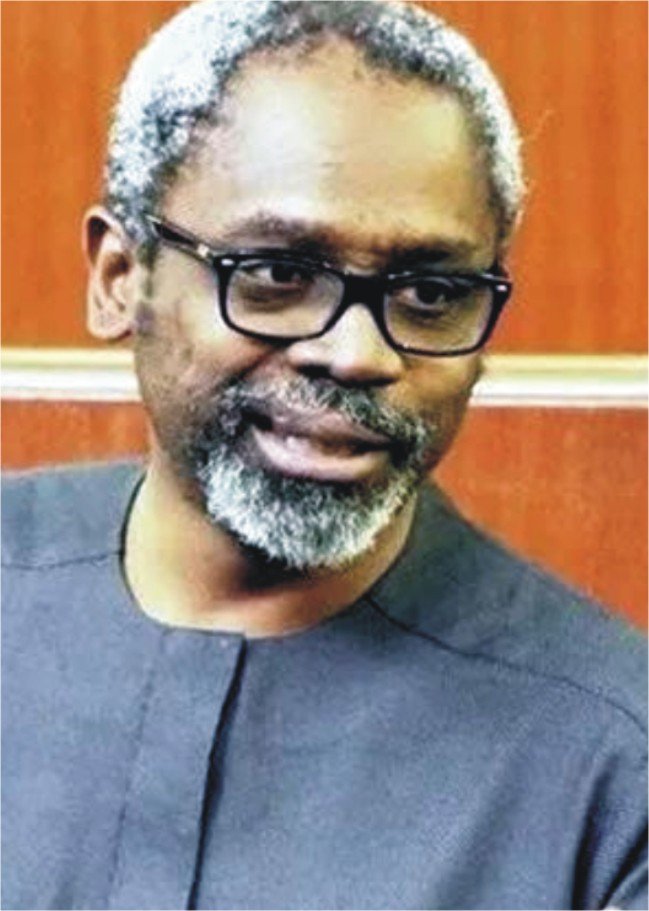
Rt. Hon. FEMI GBAJABIAMILA’s Role Revealed
Beyond official campaign appointments, a network of political associates, former legislators and loyalists across Nigeria’s 6 geopolitical zones, provide another layer of mobilisation for President Tinubu’s second-term ambition, writes City People Contributing Writer, SEUN JOSEPH.
When the Minister of the Federal Capital Territory, Nyesom Wike, made his remarks at the inauguration of the All Progressives Congress (APC) Presidential Campaign Council in Abuja on 14th October, 2026, one particular statement caught the attention of political observers.
Addressing the gathering, Wike recalled telling President Bola Ahmed Tinubu’s Chief of Staff, Femi Gbajabiamila, that if the President did not win Lagos State, he should not claim that they had won.
It was a pointed political statement, but it also carried a message about the influence and expectations surrounding Gbajabiamila as the 2027 presidential election approaches.
For a politician who spent 2 decades in the House of Representatives, served as Speaker between 2019 and 2023, and now occupies one of the most influential positions in the Presidency, the remark was another reminder that his political relevance extends beyond his official responsibilities.
Yet, the more interesting dimension of the Gbajabiamila story may lie outside the formal structures of government and the APC campaign organisation.
Across different parts of the country, a circle of political associates, former lawmakers and loyalists is believed to be contributing to the wider political conversation around Tinubu’s second-term ambition. Their activities are not necessarily driven by official appointments or instructions from the party. Rather, they reflect political relationships built over years of interaction, shared experiences and personal loyalty.
This is where the Gbajabiamila factor becomes particularly interesting.
Gbajabiamila’s political journey is significant in understanding the relationships he has cultivated.
Representing Surulere I Federal Constituency in Lagos State from 2003 to 2023, he served 6 consecutive terms in the House of Representatives. His emergence as Speaker of the Ninth House of Representatives further strengthened his national political profile.
During those years, he interacted with politicians from different political backgrounds and geopolitical zones. His position offered opportunities to build relationships with lawmakers, political stakeholders and influential figures across the country.
Some of those relationships have continued beyond his tenure in the legislature.
As Chief of Staff to President Tinubu, Gbajabiamila now operates at the centre of government. But his political connections are not limited to the corridors of the Presidential Villa. They also include individuals whose support for Tinubu’s re-election is connected to their personal relationship with him.
It is important to distinguish this circle from the official APC campaign structure. The party has its own leadership, campaign council and appointed spokespersons. The wider network being discussed is a different political layer: people who, by virtue of their association with Gbajabiamila, are willing to lend their voices, contacts, resources and political experience to the President’s second-term project.
One of the clearest indications of Gbajabiamila’s engagement with political figures across regional lines is his interaction with former lawmakers.
In August 2025, he hosted a dialogue session involving the Northern Caucus of the National Forum of Former Legislators in Abuja. The gathering provided an opportunity to discuss national politics and the 2027 election, with participants expressing support for a Southern presidency and Tinubu’s re-election.
A month later, in September 2025, he convened a Southern Summit of former legislators in Abeokuta, Ogun State. The gathering brought together former lawmakers from the South-West, South-East and South-South, with former Senate President Ken Nnamani serving as chairman of the occasion. Former Speaker Yakubu Dogara also attended as a representative of the Northern Caucus.
The summit adopted Tinubu as its preferred candidate for 2027.
These events demonstrate Gbajabiamila’s ability to engage political figures beyond his immediate Lagos constituency. They also show how former legislators can become important voices in national political mobilisation.
However, the support should not be interpreted as unanimous among all former lawmakers. Political endorsements within such groups can attract disagreements, and the positions of individual participants should not automatically be treated as the position of every former legislator.
For any presidential candidate seeking re-election, the six geopolitical zones remain central to the political calculation. No serious campaign can afford to overlook the importance of regional alliances, grassroots relationships and influential political voices.
The South-West naturally occupies a prominent place in the Gbajabiamila conversation. Lagos is not only his political base but also one of the most important centres of APC politics. Wike’s public remarks placed a spotlight on the expectation surrounding the party’s performance in the state.
Beyond Lagos, his relationships within the South-West political establishment provide another avenue for engagement. His years in the National Assembly and his position within the Presidency have given him access to political figures across the region.
In the South-East, the participation of former Senate President Ken Nnamani and other former legislators in the Abeokuta summit illustrates the importance of engaging political stakeholders from the region. The political challenge for the APC remains how to translate national-level relationships and endorsements into stronger acceptance among voters.
The South-South also features in this wider conversation. The presence of former legislators from the region at the Abeokuta gathering reflects the importance of maintaining relationships across a region where political loyalties and electoral calculations can be complex.
In the North-Central, former lawmaker Joseph Asuku Bello is one of the political figures whose public relationship with Gbajabiamila is worth noting. Bello, who represented Adavi/Okehi Federal Constituency in Kogi State, publicly celebrated Gbajabiamila’s leadership during his time as Speaker of the House of Representatives.
But Bello’s political relevance to the wider Tinubu project goes beyond his former legislative connections.
He has also emerged as a key patron of a diaspora-based movement supporting President Tinubu’s second-term ambition. This adds an international dimension to his political involvement, connecting support for the President with Nigerians and pro-Tinubu advocates operating outside the country.
His engagement in diaspora mobilisation, alongside his other political support activities, illustrates how individuals associated with Gbajabiamila can contribute to the re-election conversation through different platforms. It also reflects the growing importance of diaspora networks in shaping political narratives, communicating government policies and mobilising support beyond Nigeria’s borders.
The North-West and North-East are equally important to the national calculation. Gbajabiamila’s engagement with the Northern Caucus of former legislators provides a platform for dialogue with political figures from these regions. Nevertheless, the influence of any such network will ultimately depend on the strength of its individual relationships and its ability to connect with voters at the grassroots.
The larger point is that the 2027 contest will require more than national endorsements. It will require sustained political engagement across regions, states and constituencies.
Political mobilisation is not only about meetings, endorsements and grassroots structures. It is also about communication: explaining the administration’s record, defending its policies and persuading voters about the direction of the country.
This makes the emergence of Segun Showunmi in the APC Presidential Campaign Council’s media and strategic communication structure noteworthy.
Showunmi, who previously served as spokesperson for Atiku Abubakar’s presidential campaign in 2023, has now joined the APC’s campaign communication effort. His inclusion reflects the broader political realignments taking place ahead of the next presidential election.
He has publicly argued for support for Tinubu’s re-election, presenting continuity as an opportunity to consolidate ongoing reforms and move towards prosperity.
His role is particularly relevant because the 2027 election will involve a contest over public perception as much as political structures. The administration will need communicators capable of engaging critics, explaining difficult policy decisions and presenting its achievements to Nigerians.
Although Showunmi’s campaign appointment does not establish that he belongs to Gbajabiamila’s personal political network, his presence illustrates the wider communication effort taking shape around President Tinubu’s second-term ambition.
Perhaps the most important feature of the Gbajabiamila network is the distinction between formal political responsibility and personal loyalty.
In Nigerian politics, relationships built over years can become valuable political assets. Former colleagues, political associates and individuals who have benefited from professional or political relationships may continue to support one another long after their formal positions have changed.
For some of those associated with Gbajabiamila, the motivation may be less about an official campaign appointment and more about loyalty to a political figure with whom they have shared years of political engagement.
Such support can take different forms: mobilising contacts, participating in political meetings, promoting campaign messages, contributing personal resources or helping to build support within local political structures. Bello’s diaspora involvement is one example of how that support can extend beyond Nigeria’s borders.
The extent of these activities, including any financial contributions, should be established through direct interviews and documentary evidence before being presented as fact. But the political significance of a voluntary support network is clear: it can provide additional reach beyond the formal campaign machinery.
President Tinubu’s second-term ambition will be shaped by several factors, including the performance of his administration, the state of the economy, party unity, opposition strength and the ability of the APC to mobilise voters across the country.
Within that calculation, Gbajabiamila’s political relationships represent an important dimension worth watching.
His experience in the legislature, his current position in the Presidency and his engagement with former lawmakers give him a distinctive place in the political landscape. The public remarks by Wike, the former legislators’ gatherings and the wider political realignments around the APC all contribute to the conversation about the people and relationships that could matter in 2027.
Ultimately, the question is not simply how many political associates Gbajabiamila can bring into the Tinubu re-election conversation. It is whether those relationships can translate into meaningful political mobilisation, stronger regional engagement and votes.
As the 2027 election approaches, the Gbajabiamila factor may therefore be one of the quieter, but potentially significant, dimensions of Tinubu’s re-election calculations.
